Commercial Water Heater Problems: When Should Your Business Repair or Replace Its Water Heater?
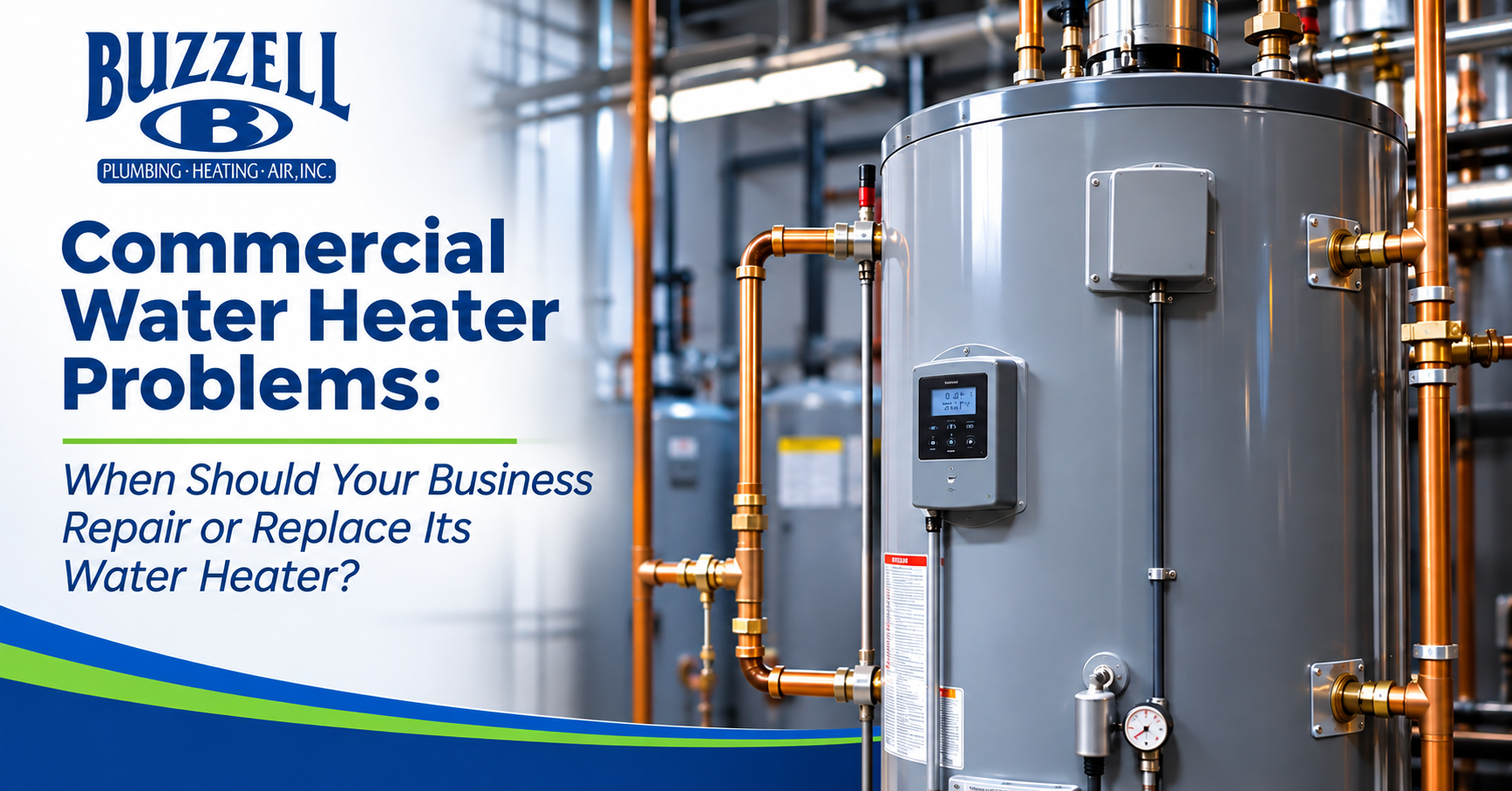
Reliable hot water is essential for many commercial buildings. Restaurants depend on it for cleaning and sanitation, healthcare facilities require consistent water temperatures, and offices, hotels, and retail properties need dependable hot water for daily operations.
When a commercial water heater begins malfunctioning, the consequences can extend beyond employee inconvenience. Inconsistent water temperatures, unexpected equipment failures, and rising utility expenses can interrupt business operations and create additional maintenance costs.
Understanding when to schedule commercial water heater repair and when replacement makes more financial sense can help business owners and facility managers avoid unnecessary expenses.
Buzzell Plumbing, Heating & Air provides commercial plumbing repair throughout Warner Robins, Macon, and surrounding Middle Georgia communities, helping businesses address water heater problems before they become major disruptions.
Why Commercial Water Heater Reliability Matters
Commercial water heaters often operate under significantly greater demands than residential equipment. Depending on the building, they may supply hot water to multiple restrooms, kitchens, cleaning stations, and specialized equipment simultaneously.
When these systems cannot meet demand, businesses may experience operational challenges, including:
- Inconsistent hot water temperatures
- Increased energy consumption
- Reduced equipment performance
- Interruptions to cleaning and sanitation procedures
- Unexpected plumbing repair expenses
- Potential water damage from leaks
Facilities with high hot water demand, including restaurants, hotels, and healthcare buildings, may be particularly vulnerable to equipment problems. Regular inspections and timely repairs help maintain reliable performance while reducing the likelihood of unexpected breakdowns.
7 Signs Your Commercial Water Heater Needs Professional Attention
Recognizing early warning signs allows facility managers to address problems before complete equipment failure occurs.
1. Inconsistent Hot Water Temperatures
If water temperatures fluctuate throughout your building, the water heater may have a malfunctioning thermostat, failing heating element, or other performance issue. Temperature inconsistencies can also result from circulation problems or equipment that cannot meet the building's current hot water demand.
Professional diagnostics can identify whether the problem involves the water heater itself or the surrounding plumbing system.
2. Hot Water Runs Out Too Quickly
Commercial water heaters must be appropriately sized for peak demand. If your building regularly runs out of hot water, the system may have insufficient heating capacity, excessive sediment accumulation, or deteriorating components.
Changes in occupancy, equipment usage, or business operations can also increase demand beyond the system's original design. A commercial plumber can evaluate whether repairs, system adjustments, or additional heating capacity are necessary.
3. Unusual Noises From the Water Heater
Rumbling, popping, or knocking noises may indicate sediment accumulation inside a storage tank. As mineral deposits build up, they can interfere with heat transfer and reduce heating efficiency.
Buzzell previously discussed how mineral accumulation affects plumbing equipment in its article on hard water and plumbing problems. Professional inspection and appropriate maintenance can help determine whether sediment buildup is contributing to declining performance.
4. Water Leaks Around the Equipment
Visible moisture around a commercial water heater should never be ignored. Leaks may originate from plumbing connections, valves, fittings, or the storage tank itself.
While certain component leaks can be repaired, a deteriorating tank may require complete replacement. Prompt commercial plumbing repair helps reduce the risk of water damage, equipment deterioration, and business interruptions.
5. Rising Energy Costs
An unexplained increase in utility expenses may indicate that water heating equipment is operating inefficiently. Sediment buildup, deteriorating components, excessive standby losses, and poorly functioning circulation systems can increase energy consumption.
Although higher utility bills do not automatically indicate water heater failure, they can justify a professional equipment evaluation.
6. Frequent Repairs
Occasional maintenance is expected, but repeated breakdowns may indicate that a commercial water heater is approaching the end of its useful service life.
When repair expenses accumulate, businesses should evaluate whether continued repairs remain financially practical.
A professional assessment can compare equipment condition, repair costs, and expected remaining service life.
7. Aging Equipment
Commercial water heater lifespan varies depending on equipment type, water quality, maintenance history, and operating conditions.
Older systems may experience reduced efficiency, component deterioration, and increasing repair requirements.
Age alone does not necessarily justify replacement, but it should be considered alongside performance and maintenance costs.
For additional plumbing warning signs, read Buzzell's article on commercial plumbing problems that require professional repair.
Commercial Water Heater Repair vs. Replacement: What Should You Consider?
Deciding between commercial water heater repair and replacement requires evaluating more than the immediate cost of fixing a problem. Several factors can help determine the most practical long-term solution.
Equipment Age and Condition
A relatively new water heater experiencing an isolated component failure may be a strong candidate for repair. However, older equipment with significant corrosion, repeated malfunctions, or declining performance may justify replacement.
The overall condition of the tank, heating components, and associated plumbing should guide the decision.
Repair Frequency and Cost
Businesses should consider how frequently their equipment requires service. Repeated repairs can become expensive, particularly when breakdowns interrupt operations or require emergency assistance.
If repair costs are approaching a substantial portion of replacement expenses, investing in new equipment may provide better long-term value.
Energy Efficiency
Older commercial water heaters may consume more energy than newer, properly sized equipment. Replacing inefficient equipment can potentially reduce operating expenses, particularly in facilities with substantial daily hot water demand.
However, projected savings should account for installation costs, equipment efficiency, and actual usage patterns.
Current and Future Hot Water Demand
A commercial building's hot water requirements can change over time. Restaurants may expand kitchen operations, offices may increase occupancy, and commercial properties may undergo renovations.
If existing equipment no longer meets demand, replacement offers an opportunity to evaluate system capacity. Buzzell provides commercial plumbing installation, including commercial tank water heaters, tankless systems, booster heaters, and recirculation systems.
How Preventive Maintenance Helps Commercial Water Heaters Last Longer
Preventive maintenance plays an important role in maintaining commercial water heater reliability. Routine service can identify developing problems before they result in unexpected equipment failures.
Depending on the system and manufacturer recommendations, professional maintenance may include:
- Inspecting tanks, valves, and plumbing connections
- Checking for leaks and corrosion
- Evaluating thermostat and heating performance
- Inspecting pressure relief valves
- Assessing sediment accumulation
- Checking recirculation system operation
- Reviewing overall equipment efficiency
Maintenance requirements vary based on equipment design, water quality, and operating conditions. Facilities with substantial hot water demand may require more frequent inspections than buildings with limited usage.
Buzzell offers commercial plumbing service, including water heater inspections, maintenance, tank flushing, thermostat testing, and preventive plumbing care. Establishing an appropriate maintenance schedule can help businesses reduce unexpected repairs and improve equipment reliability.
When Should Businesses Schedule Commercial Water Heater Service?
Businesses should schedule professional service when they notice recurring temperature fluctuations, unexplained leaks, unusual equipment noises, or declining hot water availability.
Waiting until a commercial water heater stops functioning completely can increase the likelihood of operational disruptions. Facility managers should also consider equipment evaluations when planning renovations, expanding operations, or reviewing long-term maintenance budgets.
A qualified commercial plumbing professional can evaluate system performance and recommend repairs, maintenance, or replacement based on the building's requirements.
Commercial Water Heater Repair and Replacement in Middle Georgia
Commercial water heater problems can affect daily operations, operating expenses, and building reliability. Whether your business is experiencing inconsistent temperatures, recurring equipment failures, or an aging water heating system, professional evaluation can help determine the most appropriate solution.
Since 1974, Buzzell Plumbing, Heating & Air has served businesses throughout Warner Robins, Macon, and surrounding Middle Georgia communities.
From commercial water heater repair and preventive maintenance to complete equipment replacement, Buzzell provides plumbing solutions designed to support reliable building operations.
Keep your business running with dependable hot water. Contact Buzzell Plumbing, Heating & Air to schedule commercial water heater service or discuss replacement options for your facility.