Commercial Heating Problems: 7 Warning Signs Your Building Needs HVAC Repair
Commercial Heating Problems: 7 Warning Signs Your Building Needs HVAC Repair
Commercial heating systems play an important role in maintaining comfortable, productive, and safe business environments. Whether you manage an office building, retail store, warehouse, medical facility, or commercial property, reliable heating helps keep daily operations running smoothly.
However, commercial heating problems don't always begin with a complete system breakdown. Many issues develop gradually, causing inconsistent temperatures, rising energy costs, unusual equipment behavior, or declining performance long before the system stops working.
Recognizing these warning signs early can help businesses avoid unexpected downtime and expensive repairs. Understanding when to schedule professional commercial heating repair is an important part of protecting your facility, employees, and equipment.
Why Commercial Heating Problems Shouldn't Be Ignored
Unlike residential heating systems, commercial HVAC equipment often serves larger spaces, multiple temperature zones, and buildings with varying occupancy and operational requirements.
A heating problem in one part of a commercial building can affect employees, customers, tenants, or temperature-sensitive operations. Even relatively minor equipment issues can increase energy consumption or place additional stress on other components.
Delaying necessary repairs can contribute to:
- Higher monthly energy expenses
- Uncomfortable working conditions
- Unexpected equipment shutdowns
- Increased wear on heating components
- More extensive repair requirements
- Disruptions to business operations
Addressing heating problems before they escalate helps businesses maintain more predictable operating costs and dependable indoor comfort.
7 Warning Signs Your Commercial Heating System Needs Repair
1. Uneven Heating Throughout Your Building
One of the most common commercial heating problems is inconsistent temperatures between different areas of a facility.
Employees in one office may complain about excessive heat while another department struggles to stay warm. Conference rooms, hallways, and storage areas may experience different temperatures despite operating under the same HVAC system.
Several issues can contribute to uneven heating, including restricted airflow, damaged ductwork, malfunctioning dampers, and improperly calibrated thermostats.
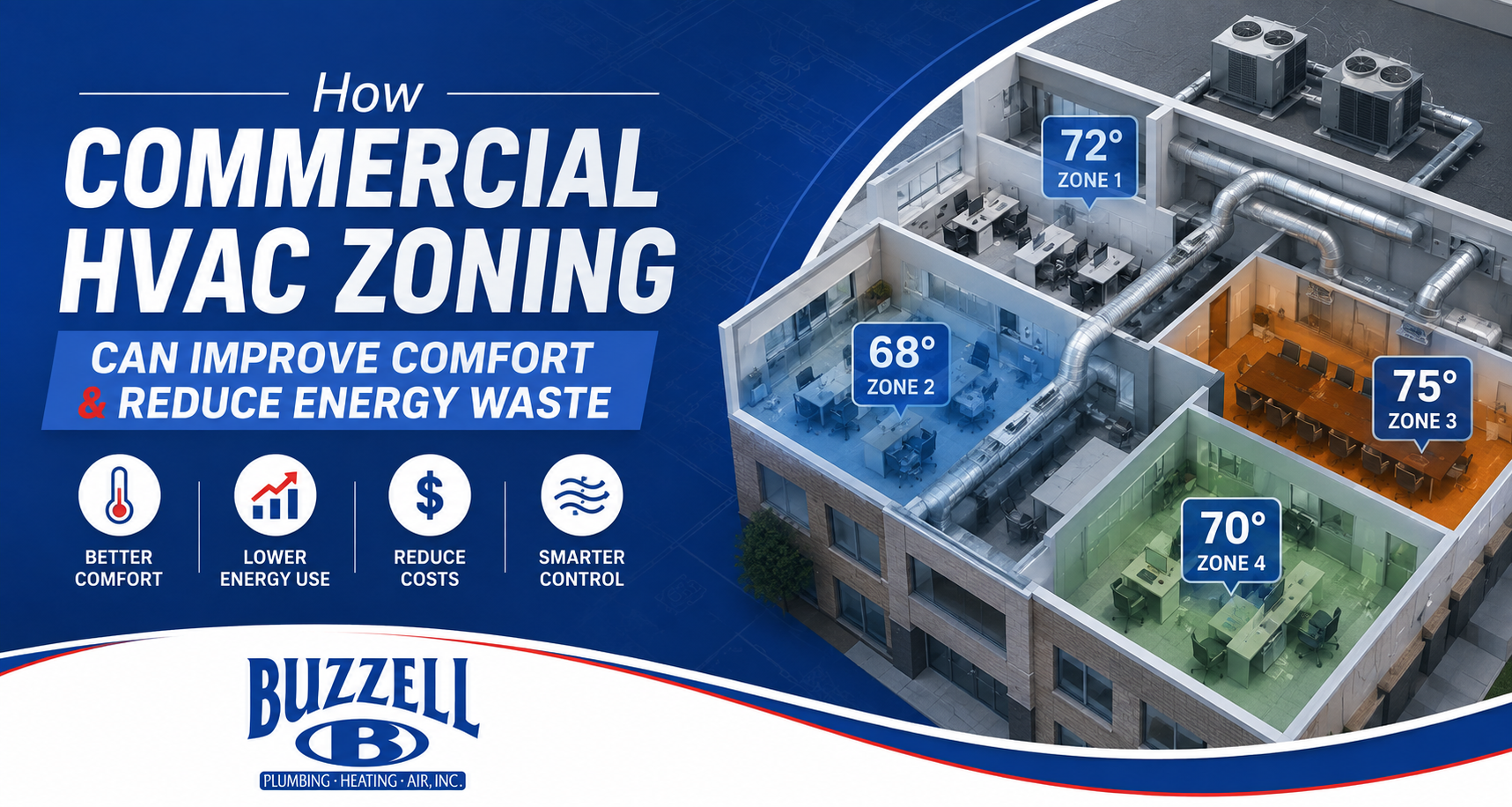
Commercial buildings with multiple heating zones may also experience problems with building automation controls or temperature sensors.
If adjusting the thermostat doesn't resolve persistent temperature differences, professional diagnostics may be necessary.
2. Unusual Noises Coming From Heating Equipment
Commercial heating systems naturally produce some operational noise, but new or unusual sounds may indicate developing mechanical problems.
Banging, grinding, rattling, squealing, or excessive vibration can point to worn components, loose connections, or equipment operating outside normal conditions.
Potential causes include:
- Worn blower motor bearings
- Loose belts or mechanical components
- Fan assembly problems
- Damaged or deteriorating equipment
- Ignition or burner issues
Ignoring these sounds can allow mechanical wear to worsen, potentially resulting in more extensive repairs.
A professional commercial HVAC technician can identify the source of unusual noises and determine whether components require adjustment, repair, or replacement.
3. Unexpected Increases in Heating Costs
An unexplained increase in energy expenses may indicate that your commercial heating system is operating inefficiently.
When heating equipment struggles to maintain the desired temperature, it may run longer or consume additional energy to compensate for declining performance.
Dirty filters, restricted airflow, worn components, and malfunctioning controls can all contribute to reduced heating efficiency.
Facility managers should compare energy consumption across similar periods while accounting for outdoor temperatures, occupancy, and operating hours.
If heating costs continue increasing without a clear explanation, scheduling a commercial heating and air conditioning service appointment can help identify potential performance problems.
Routine inspections and system evaluations may reveal opportunities to improve efficiency before additional expenses accumulate.
4. Frequent Cycling or Unusually Long Heating Cycles
Commercial heating systems should operate according to the building's heating demand and equipment design.
When equipment repeatedly turns on and off over short periods, it may be experiencing short cycling. This can occur because of thermostat problems, airflow restrictions, control malfunctions, or other equipment issues.
Alternatively, a heating system that runs continuously without reaching its temperature setpoint may be struggling to deliver sufficient heat.
Possible contributing factors include equipment performance problems, building heat loss, incorrect control settings, or changes in heating demand.
Both operating patterns deserve attention, particularly when they represent a noticeable change from normal performance.
Professional diagnostics can help determine whether the problem originates within the heating equipment, building controls, or another part of the HVAC system.
5. Cold Air Coming From Heating Vents
If your commercial heating system is running but delivering cold air, the equipment may not be producing or distributing heat correctly.
The cause depends on the type of commercial heating system installed.
For commercial furnaces and gas-fired rooftop units, problems may involve ignition components, burners, safety controls, or heating sequences.
Commercial heat pumps may experience reduced heating performance because of refrigerant-related problems, defrost issues, or malfunctioning components.
Some heat pumps temporarily deliver cooler air during normal defrost operation, but persistent heating problems should be investigated.
Because commercial heating systems contain electrical, mechanical, and sometimes gas-fired components, equipment repairs should be handled by qualified HVAC professionals.
Buzzell provides commercial heating and air conditioning repair for commercial equipment throughout Middle Georgia.
6. Thermostat or Building Control Problems
Modern commercial HVAC systems frequently rely on programmable thermostats, temperature sensors, and building automation systems to regulate heating.
When these controls malfunction, heating equipment may operate at incorrect times, maintain inaccurate temperatures, or fail to respond properly to changing conditions.
Common warning signs include inconsistent temperature readings, unexpected schedule changes, and heating equipment that doesn't respond to thermostat adjustments.
In larger facilities, control problems may affect individual zones rather than the entire building.
A professional evaluation can determine whether the issue involves thermostat calibration, faulty sensors, communication problems, or HVAC control components.
Correcting these problems can help restore dependable heating performance without unnecessarily replacing functioning equipment.
7. Your Heating System Struggles to Maintain Comfortable Temperatures
A commercial heating system that consistently fails to reach its temperature setpoint may be experiencing declining performance.
This problem can become particularly noticeable during colder weather when heating demand increases.
Possible causes include restricted airflow, worn heating components, inadequate equipment capacity, or mechanical problems affecting heat production.
Changes to the building itself can also influence heating requirements.
Renovations, expanded operating hours, additional occupants, and modified building layouts may create heating demands that differ from the original system design.
A comprehensive evaluation can help determine whether repairs, system adjustments, or equipment upgrades are appropriate.
What Causes Commercial Heating Systems to Fail?
Commercial heating failures can result from mechanical wear, electrical problems, control malfunctions, and insufficient maintenance.
Over time, components such as blower motors, belts, sensors, ignition systems, and electrical connections may deteriorate through normal operation.
Dirty filters and restricted airflow can also force equipment to work harder than necessary.
In some cases, heating problems develop because routine inspections were postponed, allowing minor deficiencies to progress into larger failures.
Scheduling regular commercial HVAC maintenance helps identify developing concerns and supports more reliable equipment operation.
Commercial Heating Repair vs. Replacement: How to Decide
Not every heating problem requires replacing the entire commercial HVAC system.
If equipment is relatively new, has been maintained consistently, and requires a manageable repair, restoring the existing system may be the most practical option.
However, replacement may deserve consideration when equipment experiences repeated breakdowns, declining efficiency, or increasingly expensive repairs.
Facility managers should evaluate equipment age, repair history, operating costs, and the consequences of unexpected downtime.
When replacement becomes necessary, professional commercial HVAC installation can help ensure new equipment is properly selected for the building's requirements.
How Preventive Maintenance Helps Reduce Commercial Heating Problems
Preventive maintenance is one of the most effective ways to reduce unexpected heating failures.
Commercial HVAC service appointments can include inspecting heating components, testing safety controls, evaluating airflow, checking electrical connections, and verifying thermostat operation.
These inspections help technicians identify developing issues before they interfere with normal heating performance.
Regular maintenance can also support energy efficiency, extend equipment service life, and provide facility managers with valuable information for future repair and replacement planning.
Buzzell offers commercial heating and air conditioning service and maintenance agreements designed to help businesses maintain reliable HVAC performance throughout the year.
Schedule Commercial Heating Repair in Warner Robins and Macon, GA
Commercial heating problems can affect far more than indoor temperatures. Equipment failures, inconsistent heating, and rising operating costs can disrupt business operations and create unnecessary expenses.
Recognizing warning signs early and scheduling professional repairs can help protect your HVAC investment and maintain a comfortable building environment.
Buzzell Plumbing, Heating & Air provides dependable commercial HVAC services throughout Middle Georgia, including Warner Robins, Macon, Perry, Bonaire, Byron, Centerville, Fort Valley, and surrounding communities.
From commercial heating repairs to preventive maintenance and system replacements, Buzzell helps businesses keep their heating and cooling equipment operating reliably.
Experiencing commercial heating problems? Contact Buzzell Plumbing, Heating & Air today to schedule professional commercial heating repair and keep your business running comfortably.