Why Your Commercial Building Has Hot and Cold Spots: 7 Common HVAC Causes

One part of your building feels comfortable, another is too warm, and employees in the conference room are reaching for sweaters. Hot and cold spots are a common complaint in commercial buildings, but constantly adjusting the thermostat usually does not solve the underlying problem.
Uneven temperatures can develop for many reasons, including airflow restrictions, ductwork problems, building controls, equipment performance, and changes to how a facility is being used. In some cases, the HVAC system itself may still be operating normally while another part of the building is preventing conditioned air from reaching each space effectively.
Finding the actual cause is important for maintaining occupant comfort and preventing unnecessary energy use. A professional commercial HVAC service can evaluate airflow, controls, equipment performance, and other factors to determine why temperatures vary throughout your facility.
Why Hot and Cold Spots Shouldn't Be Ignored
Temperature differences may seem like a minor comfort issue, especially if the HVAC system is still heating and cooling the building. However, persistent imbalances can be an early indication that the system is not operating as effectively as it should.
Employees and customers may be uncomfortable, while facility managers may find themselves continually changing thermostat settings in an attempt to compensate. That can cause HVAC equipment to operate longer than necessary and potentially increase energy consumption.
Uneven temperatures can also be one of several signs your commercial HVAC system is costing your business more than it should.
Instead of treating each uncomfortable room as an isolated problem, it is important to determine what is causing the imbalance.
1. Poor Airflow or an Unbalanced HVAC System
One of the most common causes of uneven temperatures is improper airflow.
A commercial HVAC system must distribute the correct amount of conditioned air to different areas of the building. When some spaces receive too much airflow and others receive too little, noticeable temperature differences can develop.
Airflow problems may result from dirty filters, blocked vents, improperly adjusted dampers, blower problems, or changes elsewhere in the HVAC system.
Professional air balancing can help identify these differences. During an evaluation, technicians can determine whether conditioned air is being distributed appropriately and make adjustments when necessary.
Buzzell's commercial heating and air conditioning services include airflow balancing, ventilation inspections, building control adjustments, and system performance evaluations designed to help commercial HVAC equipment operate more effectively.
2. Leaking, Damaged, or Poorly Designed Ductwork
Your HVAC equipment may be producing plenty of heated or cooled air, but that air still needs a reliable path to occupied spaces.
Leaks, disconnected sections, restrictions, or poorly configured ductwork can interfere with distribution. Conditioned air may escape before reaching certain areas, leaving some rooms uncomfortable even though the HVAC equipment itself appears to be operating normally.
Ductwork can also become a problem after a building has been renovated. Walls may be added, rooms divided, or spaces repurposed without adjusting the original HVAC distribution.
Buzzell discusses this issue further in How Building Occupancy Changes Affect Your Commercial HVAC System, including how changing layouts and occupancy levels can alter a building's heating, cooling, and ventilation requirements.
3. Thermostat and Temperature Sensor Problems
Commercial HVAC systems depend on accurate temperature information to determine when heating or cooling is needed.
A thermostat or sensor in a poor location can create problems even when it is functioning correctly. For example, a sensor located near an exterior door, direct sunlight, heat-producing equipment, or another unusually warm or cool area may not accurately represent conditions throughout the zone.
Sensors can also become inaccurate or fail over time.
If the system receives incorrect temperature information, it may heat or cool an area longer than necessary or shut down before other parts of the building reach a comfortable temperature.
Thermostat calibration and sensor testing should therefore be part of the diagnostic process when temperature differences persist.
4. HVAC Zoning or Building Control Issues
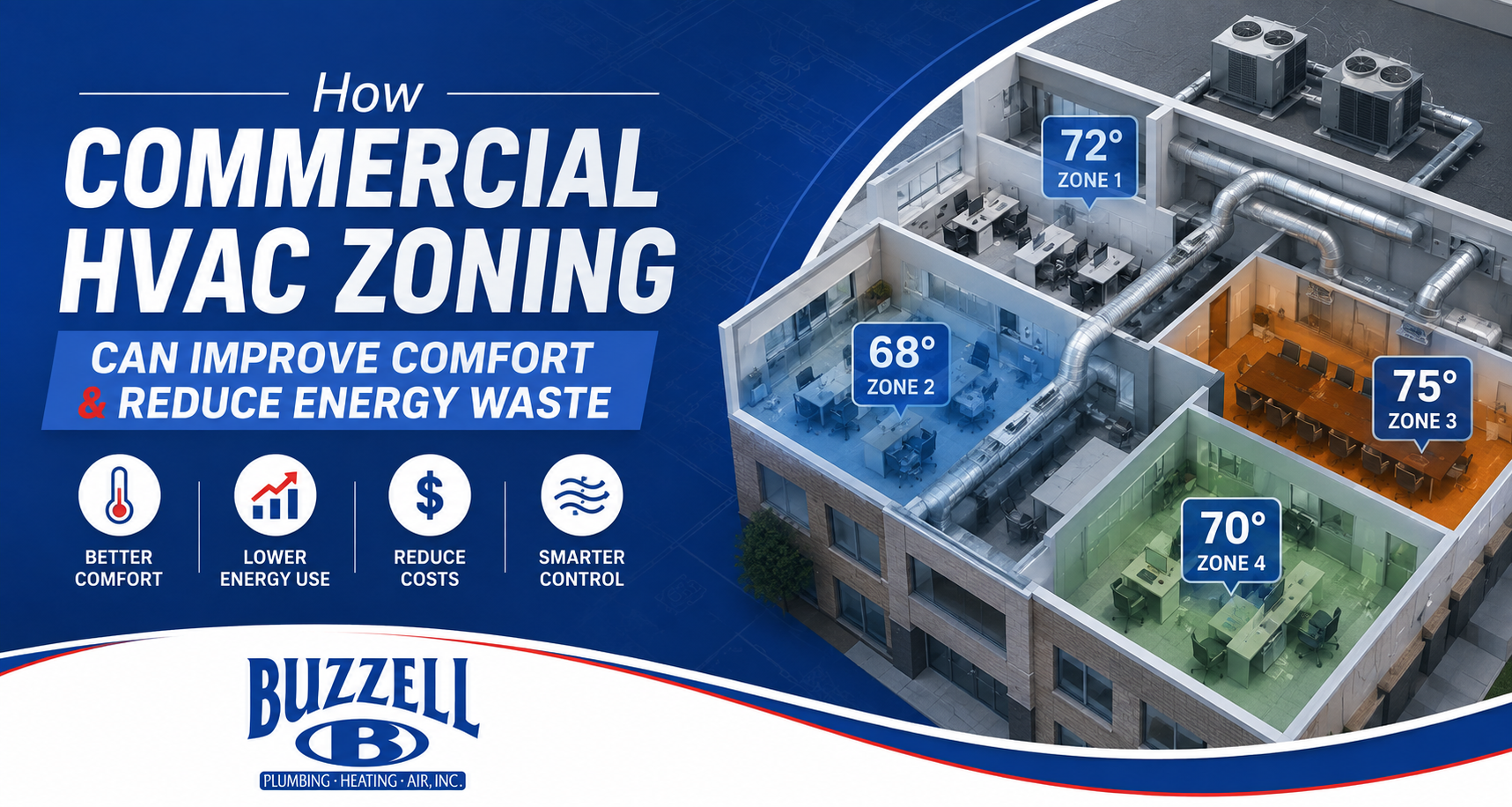
Larger commercial buildings often rely on multiple HVAC zones or building automation controls to manage different areas independently.
When these controls are configured correctly, they can improve comfort while avoiding unnecessary heating and cooling. When settings, sensors, schedules, or dampers are not operating correctly, however, one area may receive substantially different conditioning than another.
Operating schedules are another consideration. A business that has changed its hours may still have HVAC controls based on an old schedule.
Commercial HVAC diagnostics can identify control-related problems, sensor issues, and temperature imbalances. Buzzell provides commercial HVAC repair services that include airflow testing, control system diagnostics, sensor replacement, and building automation system troubleshooting.
5. Changes to Building Layout or Occupancy
Commercial buildings rarely remain exactly the same throughout their entire lifespan.
An open office may be divided into individual rooms. A storage area may become occupied workspace. A growing business may add employees and equipment. Retail displays may change, or previously unused sections of a building may become active.
These changes can alter heating and cooling requirements.
Adding people, computers, lighting, and equipment increases the amount of heat generated within a space. Meanwhile, newly constructed walls can interfere with airflow patterns that were established when the HVAC system was originally designed.
If significant changes have been made since the HVAC system was installed, the building's current needs may no longer match its original design.
6. Aging or Improperly Sized HVAC Equipment
Sometimes temperature imbalances point back to the HVAC equipment itself.
A system that is too small may struggle to maintain comfortable temperatures during periods of high demand. An oversized system can also create performance and comfort issues because it may cycle differently than a properly sized system.
Equipment can also lose performance as it ages. Motors, fans, compressors, coils, and other components experience wear over years of operation.
Recurring repairs, rising operating costs, and declining comfort may indicate that a larger equipment decision is approaching. Buzzell's guide to commercial HVAC lifecycle planning explains factors businesses should consider when deciding whether to repair, retrofit, or replace aging equipment.
For systems that do need replacement, professional commercial HVAC installation can account for building size, layout, occupancy, ventilation requirements, and usage patterns when determining appropriate equipment.
7. Neglected HVAC Maintenance
Hot and cold spots can sometimes develop gradually as HVAC performance declines.
Dirty filters can restrict airflow. Dirty coils can affect heat transfer. Worn belts, fan problems, control issues, and other small deficiencies can reduce the system's ability to distribute conditioned air consistently.
This is one reason preventive maintenance matters even when HVAC equipment appears to be working.
As explained in The Cost of Deferred Commercial HVAC Maintenance, small HVAC issues can eventually contribute to higher energy consumption, larger repairs, unexpected downtime, and shortened equipment life.
A commercial maintenance agreement can help businesses stay ahead of developing performance problems through regular inspections and system checks.
How Are Commercial HVAC Temperature Imbalances Diagnosed?
Because so many different issues can create hot and cold spots, diagnosis should look beyond the thermostat.
A commercial HVAC technician may evaluate airflow, filters, ductwork, thermostats, temperature sensors, dampers, ventilation, equipment performance, building controls, and the condition of major HVAC components.
The technician should also consider how the building is actually being used. Recent renovations, occupancy changes, new equipment, longer operating hours, or changing business needs may provide important clues.
The goal is to identify the source of the imbalance rather than continually compensating for it with thermostat changes.
Stop Fighting Over the Thermostat
Persistent hot and cold spots are often your building's way of telling you that something within the HVAC system or air distribution strategy needs attention.
Buzzell Plumbing, Heating & Air provides commercial HVAC services for businesses throughout Middle Georgia, including maintenance, diagnostics, repairs, equipment installation, airflow balancing, building controls, and system optimization.
If certain areas of your commercial building never seem to reach the right temperature, schedule an HVAC evaluation with Buzzell. Identifying the cause now can help improve comfort, support more efficient system operation, and prevent a small performance issue from becoming a larger problem.