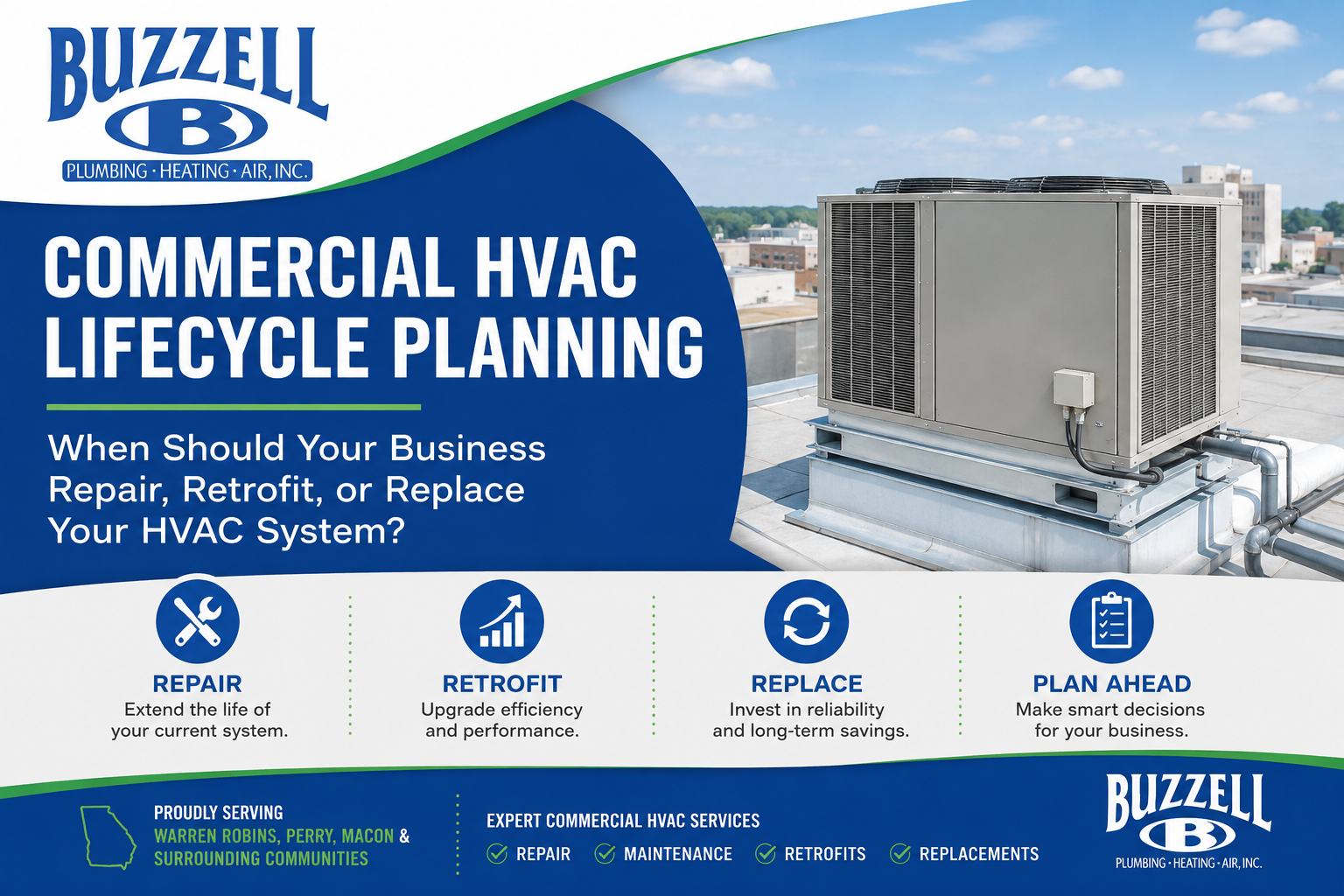
Commercial HVAC Lifecycle Planning: When Should Your Business Repair, Retrofit, or Replace Its HVAC System?
Lauren Scott • August 4, 2026

This is a subtitle for your new post

Your commercial HVAC system is one of the largest investments in your building. Whether you manage an office, retail store, medical facility, warehouse, restaurant, or industrial space, reliable heating and cooling are essential for employee productivity, customer comfort, and daily operations.


The challenge is knowing when it's time to repair an existing system, invest in upgrades, or replace it entirely. Waiting until equipment fails can lead to costly emergency repairs, unexpected downtime, and disruptions that affect your business. On the other hand, replacing equipment too early may mean spending money that could have been avoided.

By understanding your HVAC system's lifecycle, you can make informed decisions that balance reliability, efficiency, and long-term operating costs.


Understanding the Lifespan of Commercial HVAC Systems


Commercial HVAC equipment is built to withstand years of continuous operation, but no system lasts forever. Factors such as maintenance, operating hours, environmental conditions, and equipment quality all influence its lifespan.

While every building is different, most commercial systems generally last:


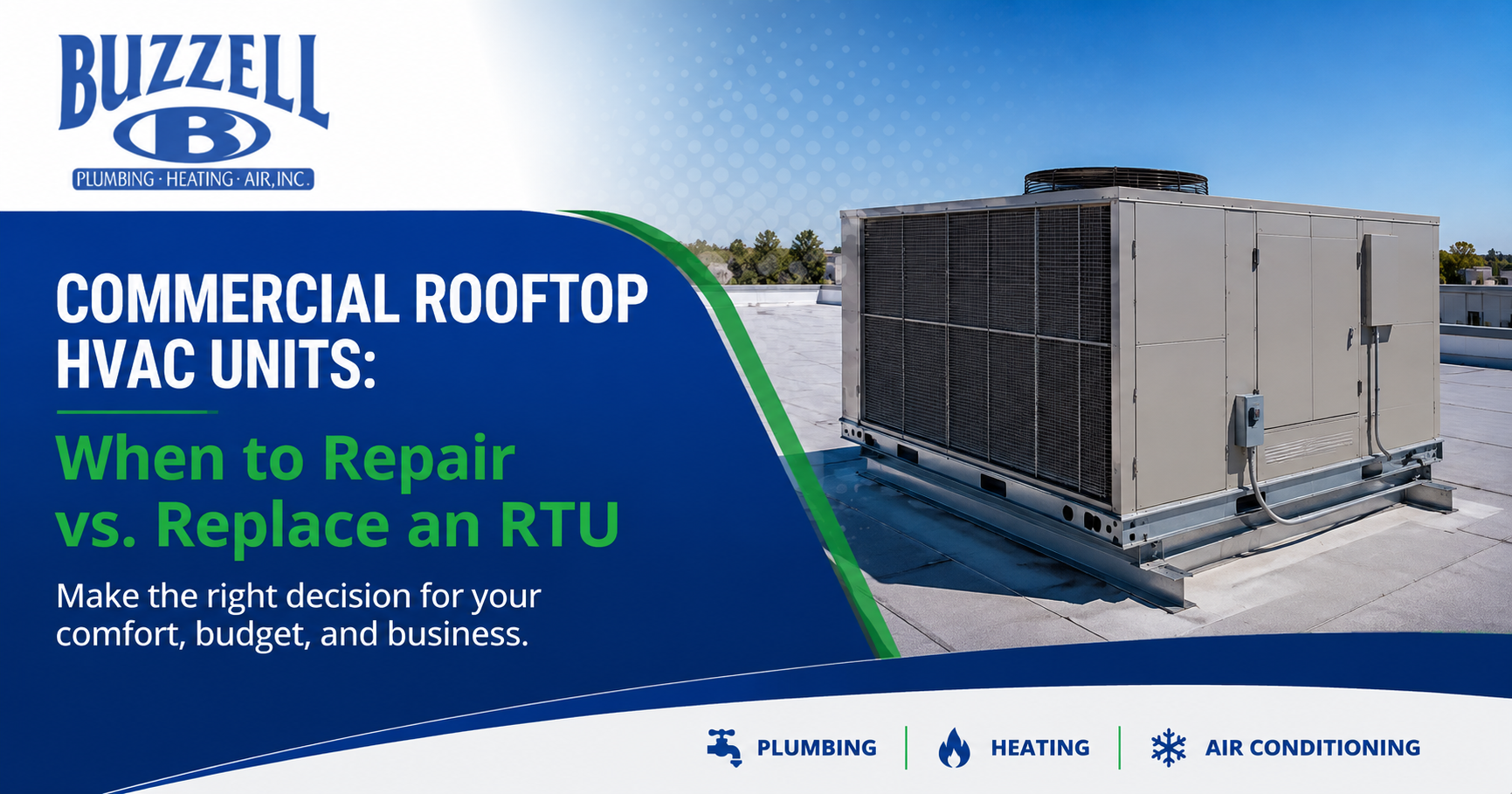
  • Rooftop units: 15 to 20 years
  • Split systems: 15 to 20 years
  • Heat pumps: 10 to 15 years
  • Boilers: 20 to 30 years
  • Commercial air conditioning systems: 15 to 20 years


Age alone does not determine whether equipment should be replaced. A well-maintained system can often exceed its expected lifespan, while neglected equipment may experience significant issues much sooner.


Regular inspections and preventive maintenance provide valuable insight into how well your system is performing and whether major investments should be considered.


Signs Your Commercial HVAC System May Be Nearing the End of Its Life


Commercial HVAC systems rarely stop working without warning. In many cases, they show signs of declining performance months or even years before complete failure occurs.


Some common warning signs include:


Frequent Repairs


An occasional repair is normal. However, if your business is scheduling service calls several times each year, repair costs can quickly exceed the value of keeping older equipment running.


Recurring issues often indicate that multiple components are beginning to wear out simultaneously.


Rising Energy Bills


Older HVAC systems typically become less efficient over time. Components work harder to deliver the same level of heating or cooling, increasing utility costs.


If your energy usage continues to rise despite similar occupancy and operating hours, your HVAC system may be contributing to the problem.


Uneven Temperatures


Hot and cold spots throughout the building often indicate declining equipment performance. Employees may constantly adjust thermostats, while customers become uncomfortable in certain areas.


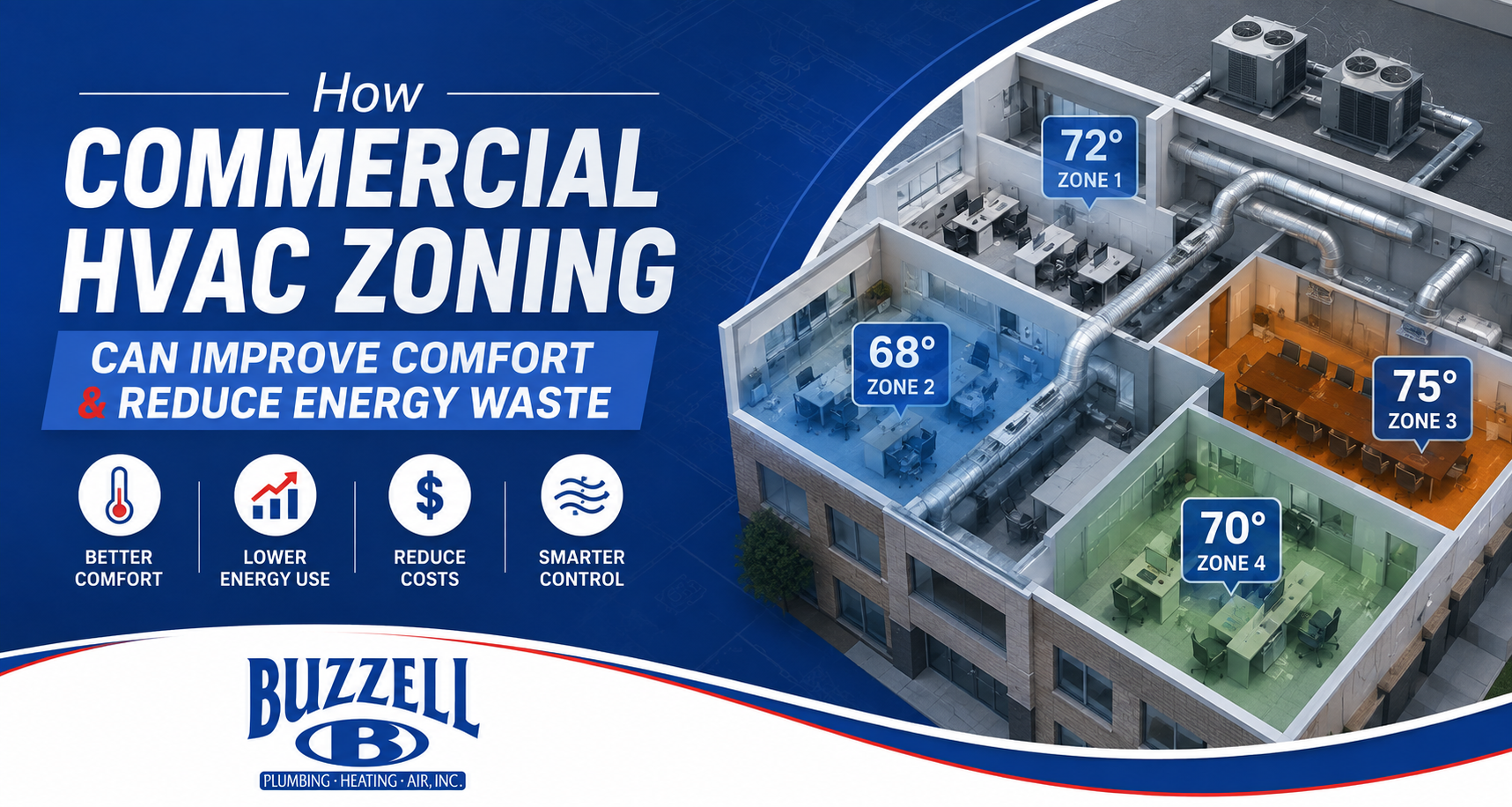
Uneven temperatures can result from aging equipment, airflow problems, failing components, or outdated controls.


Difficulty Finding Replacement Parts


As equipment ages, manufacturers may discontinue replacement parts. Repairs become more expensive, take longer to complete, and may require temporary workarounds.


If parts are becoming difficult to source, planning for replacement before a major failure occurs is often the smarter investment.


Unexpected Downtime


Businesses rely on consistent indoor comfort to operate efficiently. Emergency HVAC failures can force temporary closures, reduce employee productivity, and create an unpleasant experience for customers.


If downtime is becoming more frequent, it's time to evaluate whether continued repairs make financial sense.


When Repair Is Still the Right Choice


Not every HVAC issue requires replacing the entire system. In many situations, repairs remain the most cost-effective option.

Repairing your equipment may be the best decision if:


  • The system is relatively new
  • Repairs are isolated to individual components
  • Energy efficiency remains strong
  • Maintenance history is consistent
  • Replacement parts are readily available
  • Repair costs are relatively small compared to the value of the equipment


An experienced commercial HVAC technician can evaluate the overall condition of your system and determine whether repairs are likely to provide several more years of dependable operation.


When a Retrofit Makes More Sense


Sometimes the equipment itself is still structurally sound, but certain components have become outdated. In these situations, a retrofit can improve efficiency without the expense of a complete replacement.


Commercial HVAC retrofits may include:


  • Smart thermostats and programmable controls
  • Building automation system integration
  • Variable frequency drives (VFDs)
  • High-efficiency motors
  • Improved zoning controls
  • Indoor air quality upgrades
  • Energy-efficient control systems


These improvements can help reduce operating costs, improve occupant comfort, and extend the useful life of existing equipment.

For many businesses, retrofits provide an excellent middle ground between repairing aging equipment and replacing an entire HVAC system.


When Replacement Is the Better Long-Term Investment


Eventually, every commercial HVAC system reaches a point where replacement becomes the most practical financial decision.

Replacing your system may be appropriate when:


Repair Costs Continue to Increase


If major components such as compressors, heat exchangers, or blower assemblies begin failing, repair costs can quickly add up. Investing those dollars into aging equipment may not provide lasting value.


Energy Efficiency Has Declined


Modern commercial HVAC systems are significantly more energy efficient than systems installed 15 or 20 years ago.


Lower energy consumption can reduce monthly operating expenses while helping offset the cost of new equipment over time.


Your Building Has Changed


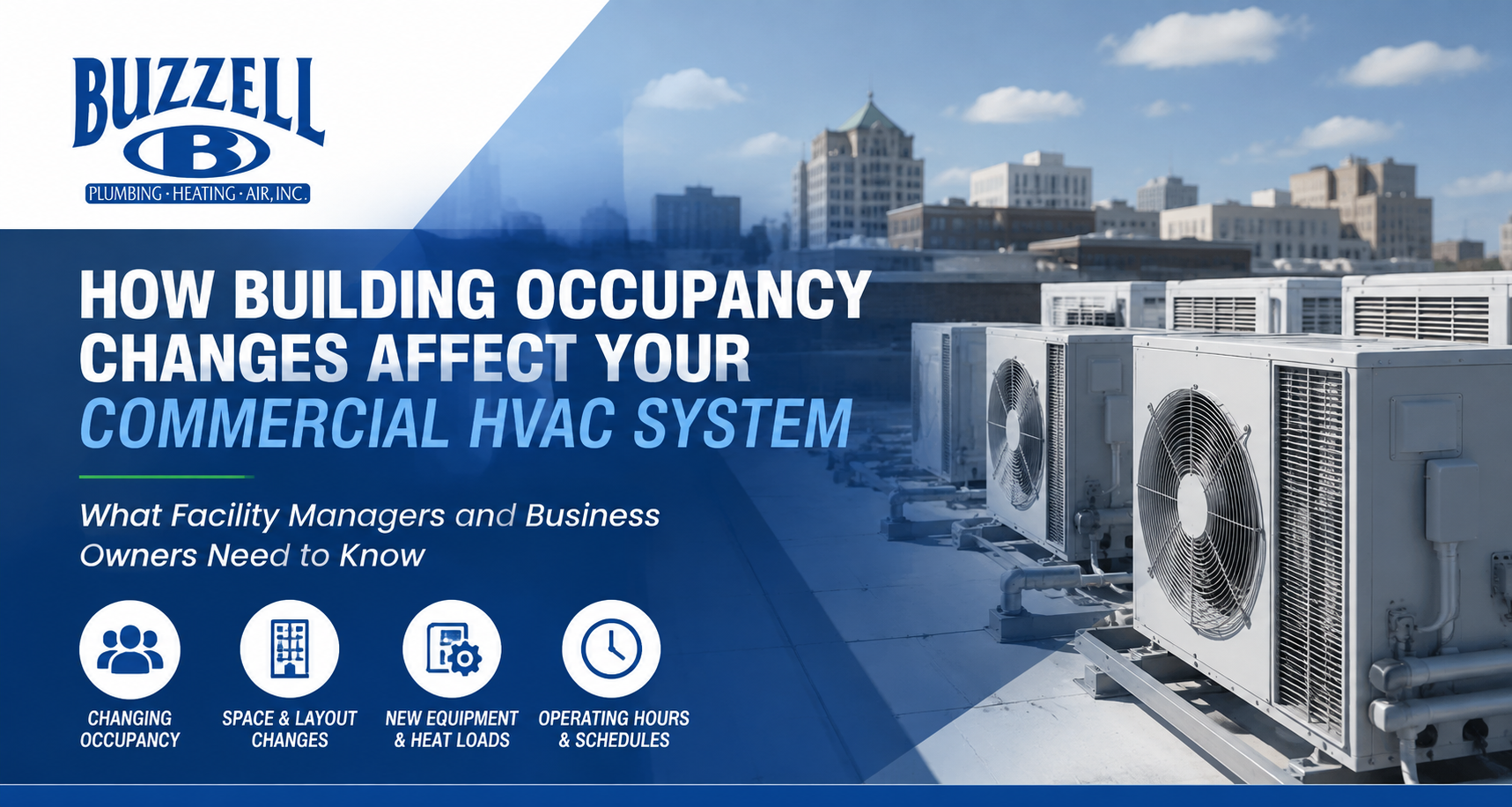
Business growth often changes HVAC requirements. Renovations, additional employees, expanded workspaces, or new equipment can place demands on systems that were designed for a different building layout.


A properly sized replacement system can better meet your facility's current needs.


Reliability Is Critical


For many businesses, HVAC downtime simply isn't an option. Medical offices, restaurants, manufacturing facilities, retail stores, and professional offices all depend on comfortable indoor environments.


Replacing unreliable equipment before it fails helps reduce the risk of emergency interruptions that affect customers and operations.


Questions Every Facility Manager Should Ask


Before making a repair-or-replace decision, consider these important questions:


  • How old is the current equipment?
  • How much has been spent on repairs during the past two years?
  • Have utility costs increased noticeably?
  • Does the system maintain consistent comfort throughout the building?
  • Are replacement parts becoming difficult or expensive to obtain?
  • Will repairs likely solve the problem, or simply delay another breakdown?
  • Does the equipment still meet the building's current heating and cooling demands?


Answering these questions with the help of a qualified HVAC professional can provide a clearer picture of the system's overall value and remaining lifespan.


Plan Ahead Instead of Reacting to Emergencies


One of the biggest mistakes businesses make is waiting until complete equipment failure before considering replacement.

Emergency replacements often happen under pressure, limiting equipment choices and increasing the likelihood of unplanned downtime. Planning ahead allows businesses to budget appropriately, compare equipment options, schedule installation during less disruptive times, and avoid unnecessary interruptions.


Routine inspections and preventive maintenance make this planning possible by identifying aging components before they become emergencies.


Partner with Buzzell for Smart Commercial HVAC Planning


At Buzzell Plumbing, Heating & Air, we help businesses throughout Middle Georgia make informed decisions about their commercial HVAC systems. Whether your equipment needs routine maintenance, expert repairs, efficiency upgrades, or a complete replacement, our experienced team provides honest recommendations based on your building's needs and long-term goals.


From offices and retail spaces to healthcare facilities, industrial buildings, and commercial properties, we're committed to keeping your heating and cooling systems operating efficiently and reliably.


If you're unsure whether your commercial HVAC system should be repaired, retrofitted, or replaced, contact Buzzell Plumbing, Heating & Air today. We'll evaluate your equipment, explain your options, and help you choose the solution that delivers the greatest value for your business.
By Lauren Scott July 27, 2026
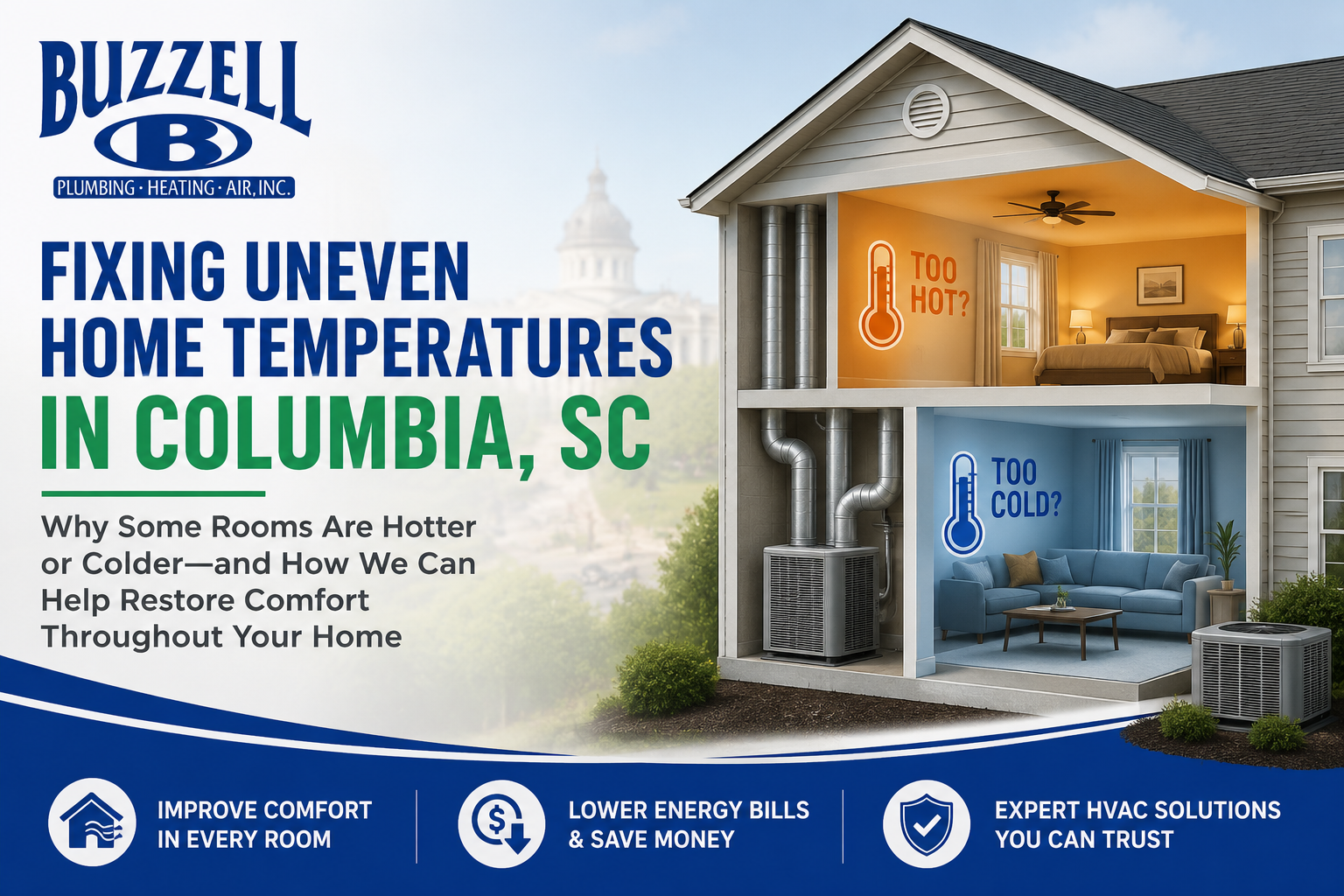
Experiencing uneven home temperatures in Columbia, SC? Learn the common causes of hot and cold spots and how Buzzell can restore comfort to every room.
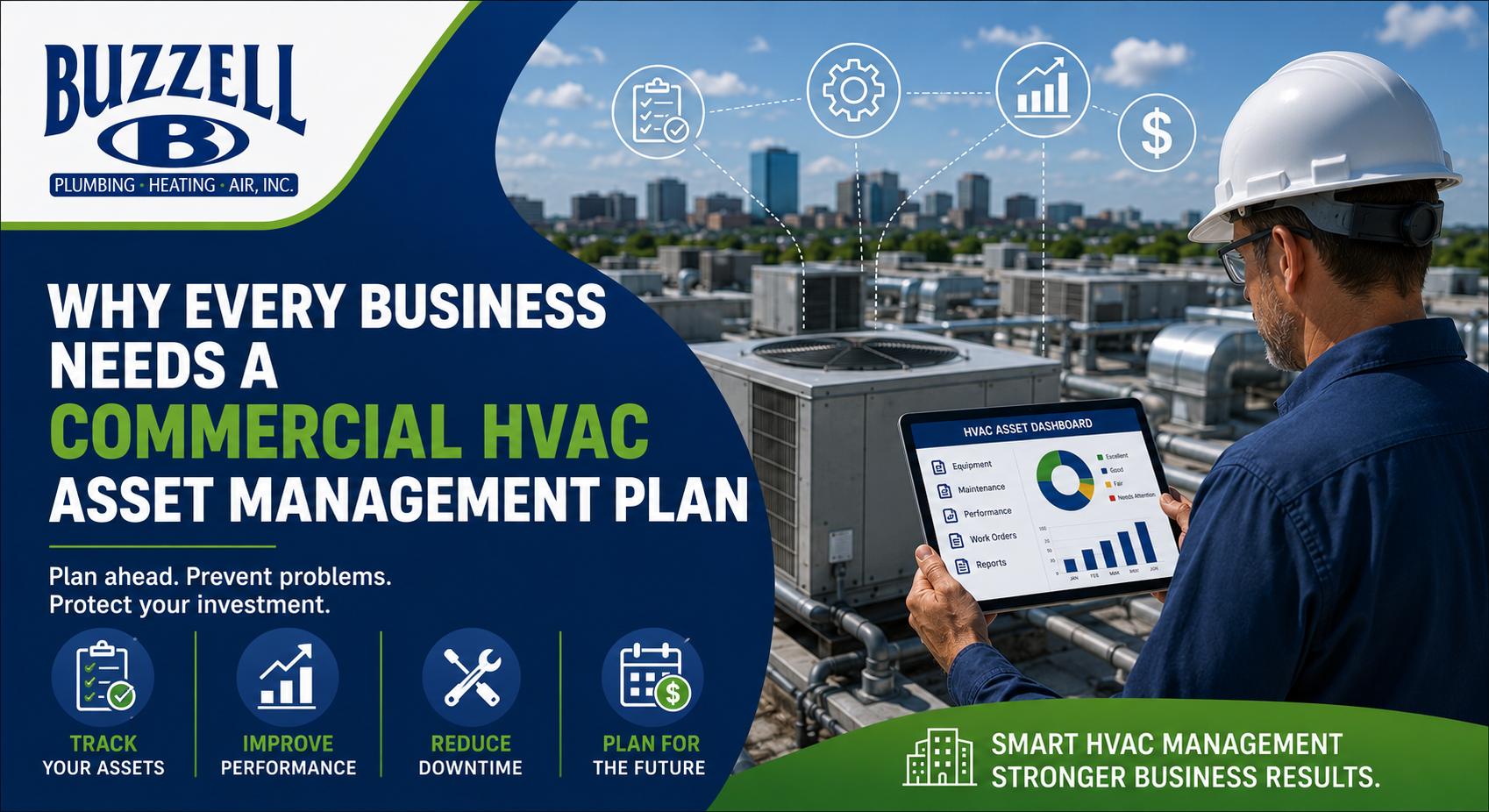
Buzzell HVAC asset management plan ad with engineer overlooking a city and laptop dashboard screenshot
By Lauren Scott July 21, 2026
Learn how a commercial HVAC asset management plan helps businesses reduce downtime, control repair costs, extend equipment life, and budget for future replacements.
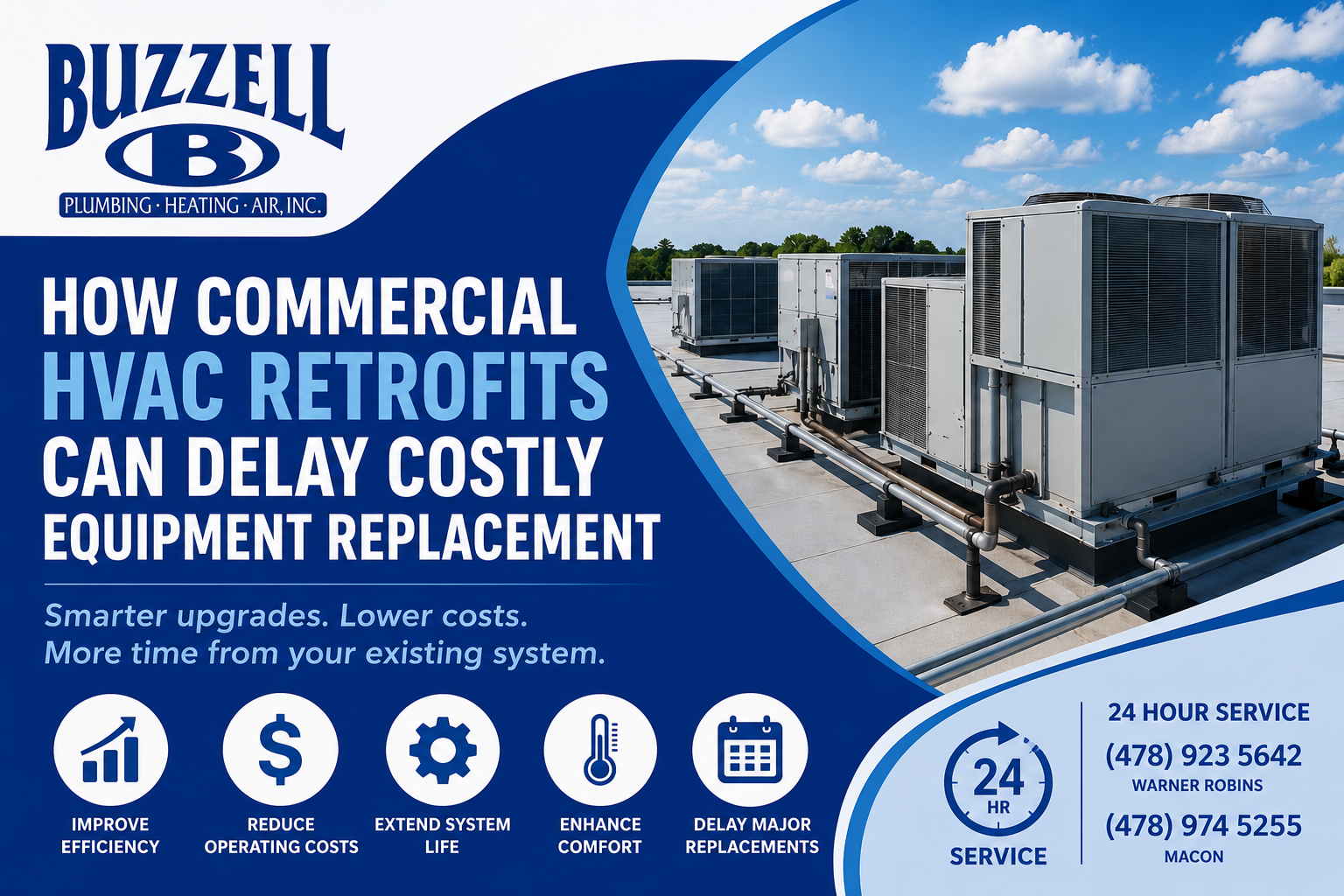
Commercial HVAC units illustrating commercial HVAC retrofits for improved efficiency and lifespan
By Lauren Scott July 13, 2026
Learn how commercial HVAC retrofits can improve efficiency, extend equipment life, reduce energy costs, and delay costly system replacement for your business.
By Lauren Scott July 8, 2026
Learn how hard water plumbing problems can damage pipes, water heaters, and appliances, plus the signs to watch for and solutions for your home.
By Anel Ganic June 30, 2026
Wondering why your upstairs is always hot? Learn the common causes of uneven cooling and how Buzzell Plumbing, Heating & Air can restore comfort.
By Lauren Scott June 18, 2026
Why is your toilet gurgling? Learn the common plumbing issues behind bubbling toilets, warning signs to watch for, and when to call a plumber.
By Lauren Scott June 8, 2026
Summer energy bills rising even though your HVAC system seems fine? Learn the hidden causes of cooling inefficiency and how homeowners can reduce costs.
By Lauren Scott June 3, 2026
The Hidden Cost of Deferred Commercial HVAC Maintenance For many businesses, HVAC maintenance is easy to push down the priority list. As long as the system is heating and cooling the building, it may seem like there is no urgent reason to schedule service. However, delaying routine commercial HVAC maintenance often creates costs that far exceed the price of preventive care. What starts as a minor issue can quickly develop into a major repair, unexpected downtime, rising energy bills, or even premature equipment replacement. For commercial facilities, the financial impact of deferred maintenance extends well beyond the HVAC system itself. Understanding these hidden costs can help business owners and facility managers make more informed decisions about protecting their buildings and budgets. Small Problems Become Expensive Repairs Commercial HVAC systems are complex pieces of equipment with numerous moving parts that operate for long hours throughout the year. Over time, components naturally experience wear and tear. Routine maintenance is designed to identify and address small issues before they become significant problems. A worn belt, dirty coil, clogged drain line, or failing electrical connection may not immediately affect system performance, but these issues rarely improve on their own. Without regular inspections, minor concerns can place additional strain on other components, leading to larger failures and more expensive repairs. A simple maintenance visit that could have corrected a small issue may ultimately prevent a costly emergency service call or equipment breakdown. Rising Energy Costs Often Go Unnoticed One of the most common hidden expenses associated with deferred HVAC maintenance is increased energy consumption. When HVAC systems are not properly maintained, they must work harder to deliver the same level of comfort. Dirty filters restrict airflow, debris-covered coils reduce heat transfer efficiency, and improperly calibrated controls can cause equipment to run longer than necessary. These inefficiencies may seem insignificant on a daily basis, but they add up over time. Businesses often experience higher utility costs without realizing that neglected maintenance is contributing to the problem. For facilities with large rooftop units, multiple zones, or extensive operating hours, even small efficiency losses can translate into substantial annual energy expenses. Unexpected Downtime Disrupts Business Operations Few facility issues are more disruptive than an unexpected HVAC failure. When heating or cooling systems stop working, the consequences often extend beyond occupant comfort. Employees may struggle to remain productive in uncomfortable temperatures. Customers may choose to leave or avoid returning. Sensitive equipment, inventory, or technology may be exposed to conditions outside recommended operating ranges. For healthcare facilities, retail locations, office buildings, warehouses, and manufacturing environments, HVAC downtime can create significant operational challenges. Emergency repairs are typically more expensive than scheduled maintenance and often occur at the least convenient times. Preventive maintenance helps reduce the likelihood of these unexpected disruptions while improving overall system reliability. Equipment Lifespan Can Be Significantly Reduced Commercial HVAC systems represent a substantial capital investment. Business owners naturally want to maximize the lifespan of their equipment before replacement becomes necessary. Deferred maintenance can shorten that lifespan considerably. When systems operate under constant strain due to dirty components, airflow restrictions, refrigerant issues, or neglected mechanical wear, critical equipment ages more rapidly. Compressors, motors, fans, and other major components are forced to work harder than intended. As a result, businesses may find themselves replacing expensive equipment years earlier than expected. A well-maintained commercial HVAC system often delivers better performance and remains operational longer, helping organizations maximize their return on investment. Indoor Air Quality Can Suffer Today's businesses place increasing importance on creating healthy, comfortable indoor environments for employees, customers, and visitors. HVAC systems play a critical role in maintaining indoor air quality. When maintenance is neglected, dust, debris, allergens, and other contaminants can accumulate within the system and circulate throughout the building. Poor ventilation, dirty filters, and neglected components may contribute to uncomfortable indoor conditions and reduced air quality. In office environments, this can impact employee comfort and satisfaction. In healthcare, education, and customer-facing facilities, indoor air quality concerns can affect both occupants and business reputation. Routine maintenance helps ensure HVAC systems continue supporting a cleaner and healthier indoor environment. Budgeting Becomes More Difficult One of the advantages of preventive maintenance is predictability. Scheduled maintenance programs allow facility managers and business owners to plan for service costs throughout the year. Deferred maintenance often produces the opposite result. Instead of manageable maintenance expenses, businesses face unexpected repair bills, emergency service calls, equipment failures, and potential replacement costs. These unplanned expenses can place strain on operational budgets and complicate long-term facility planning. Organizations that invest in regular maintenance often experience fewer financial surprises and greater control over their building-related expenses. Compliance and Safety Concerns May Increase Depending on the industry, HVAC system performance may influence compliance requirements, safety standards, or operational regulations. Temperature control, ventilation, humidity management, and indoor air quality can all play important roles in maintaining compliant facilities. When maintenance is delayed, businesses may increase the risk of operational issues that affect these requirements. Routine inspections help identify concerns before they create larger compliance, safety, or operational challenges. A Proactive Approach Delivers Long-Term Value Commercial HVAC maintenance is often viewed as an expense, but in reality, it is an investment in the performance, efficiency, and longevity of a building's critical systems. By addressing small issues early, improving energy efficiency, reducing downtime, extending equipment life, and supporting occupant comfort, preventive maintenance can help businesses avoid many of the hidden costs associated with neglect. The goal is not simply to keep equipment running today. It is to ensure reliable performance, predictable operating costs, and long-term value for years to come. Protect Your Commercial HVAC Investment  Your HVAC system is one of the most important assets in your facility. Routine maintenance can help reduce costly repairs, improve efficiency, and keep your building operating at its best. Buzzell provides commercial HVAC maintenance, repair, and system support services designed to help businesses maximize performance while minimizing unexpected disruptions. Contact our team today to learn how a proactive maintenance strategy can help protect your facility and your bottom line.
By Lauren Scott May 27, 2026
Reduce costly downtime and energy waste by learning the warning signs of an inefficient commercial HVAC system before repairs become expensive.
By Lauren Scott May 21, 2026
Learn how often Georgia homeowners should service their HVAC systems to improve efficiency, prevent breakdowns, lower energy bills, and extend equipment lifespan.