Fixing Uneven Home Temperatures in Columbia, SC: Why Some Rooms Are Always Hotter or Colder

Lauren Scott • July 27, 2026

Common Causes of Hot and Cold Spots—and How to Restore Consistent Comfort Throughout Your Home
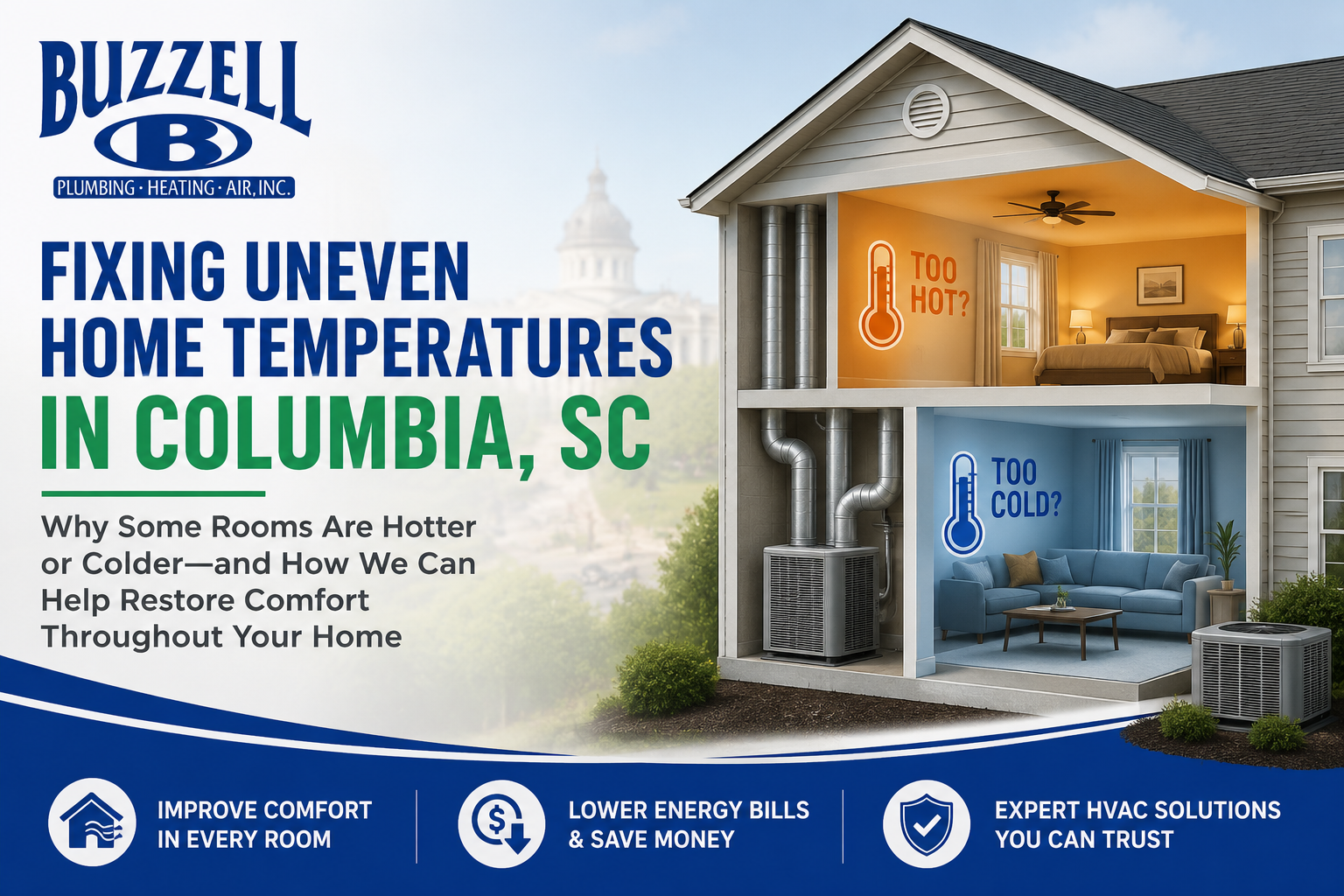
Fixing Uneven Home Temperatures in Columbia, SC: Why Some Rooms Are Always Hotter or Colder


If you've ever walked from one room in your home to another and felt a noticeable difference in temperature, you're not alone. It's one of the most common HVAC complaints homeowners have, especially during the hot, humid summers in Columbia, SC.

Maybe your upstairs bedrooms are uncomfortably warm while the downstairs stays cool. Perhaps your living room feels perfect, but your home office is always chilly. These hot and cold spots can make your home less comfortable, force your HVAC system to work harder, and even increase your energy bills.


The good news is that uneven temperatures usually have an identifiable cause—and the right solution can help restore consistent comfort throughout your home.


Here's what causes uneven home temperatures in Columbia, SC, and how Buzzell Plumbing, Heating & Air can help.


Why Uneven Temperatures Are Common in Columbia Homes


Columbia experiences long periods of heat and humidity throughout much of the year. During the summer, your air conditioner works overtime to keep indoor temperatures comfortable. Any weakness in your HVAC system, ductwork, or insulation becomes much more noticeable when outdoor temperatures climb into the 90s.


Many homes throughout the Columbia area also vary in age and construction. Older homes may have outdated ductwork or insufficient insulation, while newer homes can still experience airflow issues if the HVAC system wasn't properly designed or installed.


Even homes with relatively new heating and cooling equipment can develop uneven temperatures over time as systems age and components wear.


1. Your Air Filter Is Dirty


One of the simplest—and most overlooked—causes of uneven temperatures is a dirty air filter.


As the filter becomes clogged with dust, pollen, pet hair, and other debris, it restricts airflow throughout your HVAC system. Some rooms may receive less conditioned air than others, making them feel warmer or cooler than the rest of the house.


Restricted airflow also forces your HVAC system to work harder, increasing wear and tear while reducing efficiency.


Replacing your air filter every one to three months, depending on your home's needs, is one of the easiest ways to improve airflow and maintain consistent temperatures.


2. Your Ductwork Has Leaks or Airflow Problems


Your ductwork is responsible for delivering heated and cooled air throughout your home. If those ducts develop leaks, become disconnected, or weren't designed correctly, some rooms may receive significantly less airflow.


Common ductwork issues include:


  • Air leaks
  • Crushed or damaged ducts
  • Poor duct design
  • Blocked vents
  • Loose connections


Even small leaks can reduce system performance and make certain rooms difficult to keep comfortable. Professional duct inspections can identify hidden problems that aren't visible from inside your living space.


3. Your Home Has Poor Insulation


Your HVAC system can only do so much if conditioned air continually escapes your home.


Poor attic insulation, gaps around windows and doors, or insufficient wall insulation allow heat to enter during the summer and escape during the winter. Rooms with greater heat gain often become noticeably warmer than the rest of the house.


In Columbia's hot climate, upstairs rooms are especially vulnerable because heat naturally rises into the upper levels of the home.

Improving insulation helps your HVAC system maintain more consistent temperatures while reducing energy consumption.


4. Your HVAC System May Be the Wrong Size


Many homeowners assume that a larger air conditioner will cool their home better. In reality, an oversized system can actually create comfort problems.


An oversized HVAC system cools the home too quickly, causing it to shut off before air has been evenly distributed throughout every room. It also removes less humidity because it doesn't run long enough to complete proper cooling cycles.


On the other hand, an undersized system may struggle to keep up with Columbia's summer heat, leaving certain rooms consistently warmer than others.


Proper HVAC sizing requires a detailed load calculation that considers factors such as:


  • Square footage
  • Ceiling height
  • Window placement
  • Insulation levels
  • Home orientation
  • Occupancy


If your system was installed without these calculations, it may not be properly sized for your home.


5. Your Blower or HVAC Equipment Is Aging


As HVAC equipment ages, components naturally wear down.


A blower motor that no longer operates at full capacity can reduce airflow throughout your home. Aging compressors, dirty evaporator coils, failing capacitors, and worn electrical components can all impact overall system performance.


Sometimes homeowners assume their air conditioner simply isn't cooling well, when the real issue is that the system can no longer distribute air evenly throughout the house. Routine maintenance helps identify these issues before they lead to larger repairs or complete equipment failure.


Why Closing Vents Usually Doesn't Work


A common misconception is that closing vents in unused rooms will force more air into the rooms you use most.

Unfortunately, that's not how most residential HVAC systems are designed to operate.


Closing multiple vents can actually increase pressure inside the ductwork, reducing overall efficiency and placing additional strain on your blower motor. Over time, this added stress can contribute to premature system wear and higher operating costs.

If you're experiencing uneven temperatures, it's much better to identify the underlying cause rather than trying to redirect airflow by closing vents.


Could a Zoned HVAC System Be the Answer?


For some homes, zoning provides one of the most effective long-term solutions.


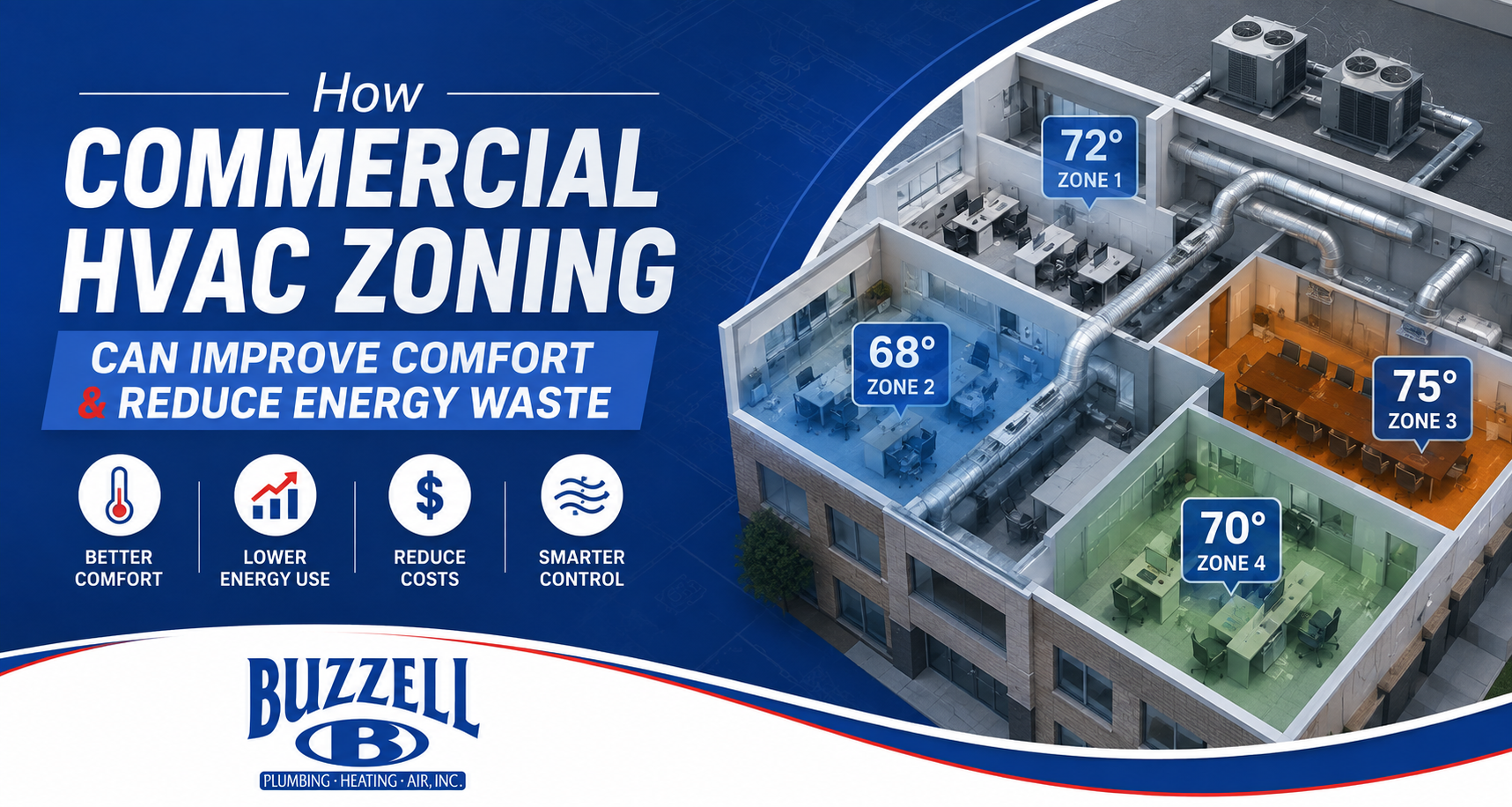
A zoned HVAC system divides your home into separate comfort areas that can each have their own thermostat. Motorized dampers inside the ductwork direct airflow where it's needed, allowing different areas of the home to maintain different temperatures.


Zoning is especially beneficial for:


  • Two-story homes
  • Homes with finished basements
  • Homes with large window walls
  • Additions or converted spaces
  • Families with different comfort preferences


While zoning isn't necessary for every home, it can dramatically improve comfort in homes that consistently struggle with uneven temperatures.


When Should You Call an HVAC Professional?


If you've replaced your air filter and confirmed that all vents are open but you're still dealing with hot and cold spots, it's time to have your system professionally evaluated.


An experienced HVAC technician can inspect your system for issues that aren't obvious to homeowners, including:


  • Airflow restrictions
  • Duct leaks
  • Equipment performance problems
  • Thermostat issues
  • Refrigerant concerns
  • Improper system sizing
  • Blower motor performance


Finding the root cause early can often prevent more expensive repairs later.


How Buzzell Plumbing, Heating & Air Can Help


At Buzzell Plumbing, Heating & Air, we understand how frustrating uneven home temperatures can be. Our experienced technicians take the time to evaluate your entire HVAC system rather than simply treating the symptoms.


Whether the issue is restricted airflow, ductwork problems, aging equipment, or an improperly sized system, we'll identify the cause and recommend solutions that make sense for your home and your budget.


Our team provides professional HVAC inspections, repairs, maintenance, and system replacements throughout Columbia and the surrounding communities. We're committed to helping homeowners enjoy reliable comfort in every room of the house—not just a few.


Enjoy Consistent Comfort Throughout Your Home


Living with hot and cold spots doesn't have to become your new normal.


Many uneven temperature problems can be resolved with the right combination of maintenance, repairs, airflow improvements, or system upgrades. Addressing these issues not only improves comfort but can also help your HVAC system run more efficiently and extend its lifespan.


If you're tired of dealing with rooms that never seem to reach the right temperature, the team at Buzzell Plumbing, Heating & Air is here to help. Contact us today to schedule an HVAC inspection and discover the best solution for fixing uneven home temperatures in Columbia, SC.
Buzzell HVAC asset management plan ad with engineer overlooking a city and laptop dashboard screenshot
By Lauren Scott July 21, 2026
Learn how a commercial HVAC asset management plan helps businesses reduce downtime, control repair costs, extend equipment life, and budget for future replacements.
Commercial HVAC units illustrating commercial HVAC retrofits for improved efficiency and lifespan
By Lauren Scott July 13, 2026
Learn how commercial HVAC retrofits can improve efficiency, extend equipment life, reduce energy costs, and delay costly system replacement for your business.
By Lauren Scott July 8, 2026
Learn how hard water plumbing problems can damage pipes, water heaters, and appliances, plus the signs to watch for and solutions for your home.
By Anel Ganic June 30, 2026
Wondering why your upstairs is always hot? Learn the common causes of uneven cooling and how Buzzell Plumbing, Heating & Air can restore comfort.
By Lauren Scott June 18, 2026
Why is your toilet gurgling? Learn the common plumbing issues behind bubbling toilets, warning signs to watch for, and when to call a plumber.
By Lauren Scott June 8, 2026
Summer energy bills rising even though your HVAC system seems fine? Learn the hidden causes of cooling inefficiency and how homeowners can reduce costs.
By Lauren Scott June 3, 2026
The Hidden Cost of Deferred Commercial HVAC Maintenance For many businesses, HVAC maintenance is easy to push down the priority list. As long as the system is heating and cooling the building, it may seem like there is no urgent reason to schedule service. However, delaying routine commercial HVAC maintenance often creates costs that far exceed the price of preventive care. What starts as a minor issue can quickly develop into a major repair, unexpected downtime, rising energy bills, or even premature equipment replacement. For commercial facilities, the financial impact of deferred maintenance extends well beyond the HVAC system itself. Understanding these hidden costs can help business owners and facility managers make more informed decisions about protecting their buildings and budgets. Small Problems Become Expensive Repairs Commercial HVAC systems are complex pieces of equipment with numerous moving parts that operate for long hours throughout the year. Over time, components naturally experience wear and tear. Routine maintenance is designed to identify and address small issues before they become significant problems. A worn belt, dirty coil, clogged drain line, or failing electrical connection may not immediately affect system performance, but these issues rarely improve on their own. Without regular inspections, minor concerns can place additional strain on other components, leading to larger failures and more expensive repairs. A simple maintenance visit that could have corrected a small issue may ultimately prevent a costly emergency service call or equipment breakdown. Rising Energy Costs Often Go Unnoticed One of the most common hidden expenses associated with deferred HVAC maintenance is increased energy consumption. When HVAC systems are not properly maintained, they must work harder to deliver the same level of comfort. Dirty filters restrict airflow, debris-covered coils reduce heat transfer efficiency, and improperly calibrated controls can cause equipment to run longer than necessary. These inefficiencies may seem insignificant on a daily basis, but they add up over time. Businesses often experience higher utility costs without realizing that neglected maintenance is contributing to the problem. For facilities with large rooftop units, multiple zones, or extensive operating hours, even small efficiency losses can translate into substantial annual energy expenses. Unexpected Downtime Disrupts Business Operations Few facility issues are more disruptive than an unexpected HVAC failure. When heating or cooling systems stop working, the consequences often extend beyond occupant comfort. Employees may struggle to remain productive in uncomfortable temperatures. Customers may choose to leave or avoid returning. Sensitive equipment, inventory, or technology may be exposed to conditions outside recommended operating ranges. For healthcare facilities, retail locations, office buildings, warehouses, and manufacturing environments, HVAC downtime can create significant operational challenges. Emergency repairs are typically more expensive than scheduled maintenance and often occur at the least convenient times. Preventive maintenance helps reduce the likelihood of these unexpected disruptions while improving overall system reliability. Equipment Lifespan Can Be Significantly Reduced Commercial HVAC systems represent a substantial capital investment. Business owners naturally want to maximize the lifespan of their equipment before replacement becomes necessary. Deferred maintenance can shorten that lifespan considerably. When systems operate under constant strain due to dirty components, airflow restrictions, refrigerant issues, or neglected mechanical wear, critical equipment ages more rapidly. Compressors, motors, fans, and other major components are forced to work harder than intended. As a result, businesses may find themselves replacing expensive equipment years earlier than expected. A well-maintained commercial HVAC system often delivers better performance and remains operational longer, helping organizations maximize their return on investment. Indoor Air Quality Can Suffer Today's businesses place increasing importance on creating healthy, comfortable indoor environments for employees, customers, and visitors. HVAC systems play a critical role in maintaining indoor air quality. When maintenance is neglected, dust, debris, allergens, and other contaminants can accumulate within the system and circulate throughout the building. Poor ventilation, dirty filters, and neglected components may contribute to uncomfortable indoor conditions and reduced air quality. In office environments, this can impact employee comfort and satisfaction. In healthcare, education, and customer-facing facilities, indoor air quality concerns can affect both occupants and business reputation. Routine maintenance helps ensure HVAC systems continue supporting a cleaner and healthier indoor environment. Budgeting Becomes More Difficult One of the advantages of preventive maintenance is predictability. Scheduled maintenance programs allow facility managers and business owners to plan for service costs throughout the year. Deferred maintenance often produces the opposite result. Instead of manageable maintenance expenses, businesses face unexpected repair bills, emergency service calls, equipment failures, and potential replacement costs. These unplanned expenses can place strain on operational budgets and complicate long-term facility planning. Organizations that invest in regular maintenance often experience fewer financial surprises and greater control over their building-related expenses. Compliance and Safety Concerns May Increase Depending on the industry, HVAC system performance may influence compliance requirements, safety standards, or operational regulations. Temperature control, ventilation, humidity management, and indoor air quality can all play important roles in maintaining compliant facilities. When maintenance is delayed, businesses may increase the risk of operational issues that affect these requirements. Routine inspections help identify concerns before they create larger compliance, safety, or operational challenges. A Proactive Approach Delivers Long-Term Value Commercial HVAC maintenance is often viewed as an expense, but in reality, it is an investment in the performance, efficiency, and longevity of a building's critical systems. By addressing small issues early, improving energy efficiency, reducing downtime, extending equipment life, and supporting occupant comfort, preventive maintenance can help businesses avoid many of the hidden costs associated with neglect. The goal is not simply to keep equipment running today. It is to ensure reliable performance, predictable operating costs, and long-term value for years to come. Protect Your Commercial HVAC Investment  Your HVAC system is one of the most important assets in your facility. Routine maintenance can help reduce costly repairs, improve efficiency, and keep your building operating at its best. Buzzell provides commercial HVAC maintenance, repair, and system support services designed to help businesses maximize performance while minimizing unexpected disruptions. Contact our team today to learn how a proactive maintenance strategy can help protect your facility and your bottom line.
By Lauren Scott May 27, 2026
Reduce costly downtime and energy waste by learning the warning signs of an inefficient commercial HVAC system before repairs become expensive.
By Lauren Scott May 21, 2026
Learn how often Georgia homeowners should service their HVAC systems to improve efficiency, prevent breakdowns, lower energy bills, and extend equipment lifespan.
By Lauren Scott May 14, 2026
Stay cool this summer with expert AC repair in Warner Robins, GA. Learn the top warning signs your air conditioner may need professional service.