Optimal Cooling: How Proper AC Installation Enhances Performance in Your Home in Warner Robins and Macon, GA

June 4, 2024

As the sweltering summer months approach, Warner Robins and Macon, GA, residents know all too well the importance of a reliable air conditioning system. With temperatures soaring and humidity levels rising, a well-functioning AC unit becomes an absolute necessity for comfort and maintaining a healthy indoor environment. That's where Buzzell Plumbing, a trusted local air conditioning installation and maintenance expert, comes into play.


The Importance of Air Conditioning in Warner Robins and Macon


Living in the heart of central Georgia, Warner Robins and Macon residents are no strangers to the region's intense summer heat. With average temperatures often exceeding 90°F (32°C) and humidity levels that can make the air feel oppressive, a reliable air conditioning system is more than just a luxury—it's a necessity.


Beyond providing a cool and comfortable living space, a well-functioning air conditioner offers numerous benefits. It helps to improve indoor air quality by filtering out pollutants, allergens, and other airborne contaminants, creating a healthier environment for you and your family. Additionally, a properly sized and installed AC unit can significantly enhance energy efficiency, lowering utility bills and reducing carbon footprint.


The Consequences of Poor AC Installation


While the benefits of a well-functioning air conditioning system are undeniable, the consequences of poor installation can be far-reaching. Improper installation can lead to a variety of issues, including:


  • Reduced Efficiency: An incorrectly installed AC unit may struggle to cool your home effectively, leading to higher energy consumption and increased utility bills.
  • Shortened Lifespan: Poor installation can strain the system unnecessarily, causing components to wear out prematurely and requiring costly repairs or replacements.
  • Compromised Comfort: Inadequate airflow, uneven cooling, and hot spots throughout your home can make maintaining a comfortable living environment challenging.
  • Safety Concerns: Faulty electrical connections or improper ventilation can potentially lead to safety hazards, putting your family at risk.


To avoid these pitfalls and ensure optimal performance, it's crucial to entrust your air conditioning installation to experienced professionals like Buzzell Plumbing.


Understanding AC Installation


Proper air conditioning installation is a complex process that involves much more than simply placing the unit in your home. It encompasses a wide range of factors, including:


  1. Sizing the System: Accurate load calculations are essential to determine the appropriate size of the air conditioning unit for your home. An undersized system will struggle to cool your living space effectively, while an oversized unit can lead to inefficient operation and excessive energy consumption.
  2. Ductwork Design and Installation: The ductwork is vital in distributing cool air throughout your home. Proper duct sizing, layout, and installation ensure efficient airflow and even cooling.
  3. Thermostat Placement: Your thermostat's location can significantly impact the performance of your air conditioning system. Improper placement, such as near heat sources or in direct sunlight, can lead to inaccurate temperature readings and inefficient operation.
  4. Refrigerant Handling: Refrigerants are the lifeblood of your air conditioning system, and their handling requires specialized knowledge and equipment. Improper refrigerant charging or leaks can compromise the system's efficiency and cause environmental damage.
  5. Electrical Connections: Air conditioning units require proper electrical connections to function safely and efficiently. Faulty wiring or inadequate circuit capacity can lead to system malfunctions, safety hazards, and even fires.
  6. Ventilation and Drainage: Proper ventilation and drainage are essential for removing excess moisture and preventing condensation buildup, which can lead to mold growth and other indoor air quality issues.


Attempting to tackle these complex tasks without the necessary expertise and tools can result in costly mistakes and subpar performance. That's why it's always recommended to rely on professional air conditioning installation services.


Why Choose Professional Installation?


Hiring experienced professionals like Buzzell Plumbing for your air conditioning installation offers numerous advantages that can save you time, money, and hassle in the long run. Here are some key benefits of professional AC installation:


  1. Expertise and Training: Professional HVAC technicians undergo extensive training and certification programs, ensuring they have the knowledge and skills to handle even the most complex installations.
  2. Proper Tools and Equipment: Professionals have access to specialized tools and equipment designed specifically for air conditioning installation and maintenance, allowing them to perform tasks with precision and efficiency.
  3. Code Compliance: Building codes and regulations govern the installation of air conditioning systems, and professionals are well-versed in ensuring compliance to avoid potential fines or legal issues.
  4. Safety Protocols: Professional installers follow strict safety protocols to protect themselves, your family, and your property during installation.
  5. Warranty Protection: Many manufacturers require professional installation to validate equipment warranties, ensuring your investment is protected in case of defects or malfunctions.
  6. Efficiency Optimization: Professionals have the expertise to optimize your system for maximum efficiency, helping you save money on energy bills while reducing your carbon footprint.
  7. Ongoing Support: Reputable HVAC companies like Buzzell Plumbing offer ongoing maintenance and support services, ensuring your air conditioning system continues to operate at peak performance for years to come.


By choosing professional installation services, you can have peace of mind knowing that your air conditioning system is installed correctly, operating efficiently, and providing the comfort and indoor air quality you deserve.


Buzzell Plumbing: Your Go-To AC Installation Experts in Warner Robins and Macon


Regarding air conditioning installation in Warner Robins and Macon, GA, Buzzell Plumbing is a trusted and experienced provider. With a team of highly trained and certified HVAC technicians, Buzzell Plumbing has been serving the local community for years, delivering exceptional service and ensuring customer satisfaction.


One key factor that sets Buzzell Plumbing apart is its commitment to using the latest tools and techniques in air conditioning installation. They stay up-to-date with industry advancements, ensuring your system is installed using the most efficient and effective methods.


In addition to its technical expertise, Buzzell Plumbing is known for its customer-centric approach. It takes the time to understand your specific needs and preferences, tailoring its services to provide the best possible solution for your home or business.


Successful Installations and Customer Satisfaction


Buzzell Plumbing has a proven track record of successful air conditioning installations in Warner Robins and Macon, earning the trust and loyalty of countless satisfied customers. Here are a few examples of their exceptional work:


  • Residential AC Installation in Warner Robins: The Jones family had been struggling with an old, inefficient air conditioning system driving up their energy bills. Buzzell Plumbing expertly installed a new, energy-efficient unit, ensuring proper sizing, ductwork design, and thermostat placement. The family now enjoys consistent cooling, improved indoor air quality, and significant energy savings.
  • Commercial AC Installation in Macon: A local restaurant needed a reliable air conditioning system to maintain a comfortable environment for its customers and staff. Buzzell Plumbing's team of professionals worked diligently to install a powerful commercial-grade unit, considering the unique challenges of the restaurant's layout and ventilation requirements. The result was a cool, inviting atmosphere that enhanced the dining experience for patrons.
  • Multi-Unit Residential Installation in Warner Robins: A condominium complex faced aging air conditioning units, which caused frequent breakdowns and soaring energy costs. Buzzell Plumbing coordinated a seamless installation of new, high-efficiency units across multiple units, minimizing disruptions to residents and ensuring a consistent level of comfort throughout the complex.


These success stories are just a glimpse into Buzzell Plumbing's expertise and dedication to every air conditioning installation project.


As the summer heat intensifies in Warner Robins and Macon, GA, having a properly installed and well-functioning air conditioning system is essential for maintaining a comfortable and healthy living environment. By understanding the importance of professional AC installation and the potential consequences of improper installation, you can make an informed decision that will benefit you and your family for years to come.


Buzzell Plumbing's team of experienced and certified HVAC technicians is dedicated to providing exceptional air conditioning installation services. With their commitment to using the latest tools and techniques, adhering to industry standards and best practices, and delivering outstanding customer service, you can trust that your air conditioning system will be installed correctly, optimized for maximum efficiency, and provide reliable cooling throughout the hottest summer days.

Don't let the scorching summer heat catch you unprepared. If you need a new air conditioning installation or want to upgrade your existing system, now is the perfect time to take action. Contact Buzzell Plumbing today. Their knowledgeable team will happily assess your needs, provide expert recommendations, and ensure that your home or business stays cool and comfortable throughout the summer months.

Call to Action

Prepare for the heat and invest in a properly installed air conditioning system with Buzzell Plumbing – your trusted partner for reliable and efficient cooling solutions in Warner Robins and Macon, GA.
By Lauren Scott September 8, 2026
Discover 7 common causes of hot and cold spots in commercial buildings and how professional HVAC service can improve airflow, comfort, and efficiency.
By Lauren Scott August 31, 2026
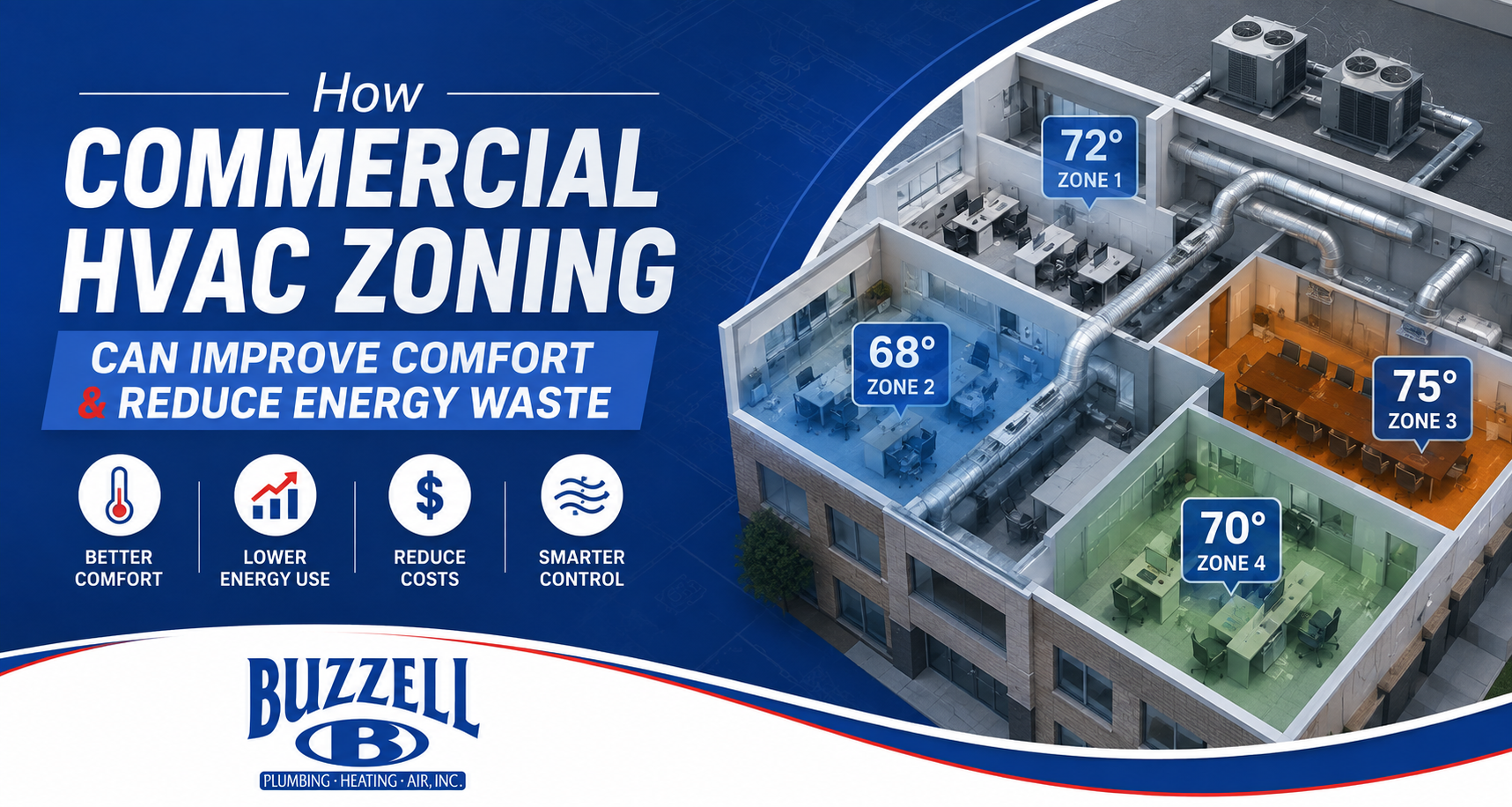
Maintaining comfortable temperatures throughout a commercial building can be more complicated than simply setting the thermostat. One area may feel too warm while another feels too cold. Conference rooms can heat up quickly when they are full, while storage areas may require much less heating and cooling. Offices near large windows may also experience very different conditions than interior spaces. These temperature differences can create comfort complaints and cause HVAC equipment to work harder than necessary. For some commercial properties, HVAC zoning can provide greater control over how heating and cooling are distributed throughout the building. Understanding how commercial HVAC zoning works can help business owners and facility managers determine whether zoning or other HVAC improvements could provide better comfort, efficiency, and control. What Is Commercial HVAC Zoning? Commercial HVAC zoning divides a building into separate areas, or zones, that can be managed according to their individual heating and cooling requirements. Instead of treating an entire building as one space, zoning allows different areas to receive heating or cooling based on factors such as occupancy, operating schedules, building layout, and temperature requirements. Depending on the HVAC system and facility, zoning may incorporate multiple thermostats, sensors, dampers, variable air volume components, building controls, or separate HVAC equipment. For example, an office building could have separate zones for conference rooms, individual offices, common areas, and storage spaces. A retail property might divide customer areas, offices, stockrooms, and other spaces into different zones. The exact approach depends on the building and its existing HVAC infrastructure. Why Do Commercial Buildings Develop Hot and Cold Spots? Uneven temperatures are common in commercial buildings because different areas rarely have identical heating and cooling requirements. Several factors can contribute to temperature differences throughout a facility. Occupancy levels: A busy conference room or customer area can generate significantly more heat than an empty office or storage space. Sun exposure: Areas with large windows or significant afternoon sunlight may become warmer than interior portions of the building. Equipment: Computers, commercial appliances, machinery, lighting, and other equipment can add heat to certain spaces. Building layout: Multi-story properties, additions, high ceilings, open spaces, and enclosed offices can all affect airflow and temperature distribution. Operating schedules: Some portions of a building may be occupied for much longer periods than others. However, zoning is not automatically the solution to every hot or cold spot. Uneven temperatures can also indicate airflow restrictions, ductwork problems, improperly sized equipment, malfunctioning controls, or HVAC equipment that needs service. A professional evaluation can help identify the actual cause before changes are made. How Can Commercial HVAC Zoning Reduce Energy Waste? One of the biggest potential advantages of zoning is having greater control over where and when conditioned air is needed. Consider a commercial building where employees primarily work in offices during the day, but a large conference area is used only occasionally. Treating both areas exactly the same can result in unnecessary heating or cooling. With properly designed zoning and controls, HVAC operation can better reflect how different areas of the building are actually being used. Zoning can also help address spaces with naturally different temperature requirements. An interior office may need less cooling than a west-facing conference room receiving afternoon sunlight. Instead of repeatedly adjusting a single thermostat in an attempt to satisfy every part of the building, zoning provides more precise temperature management. Reducing unnecessary HVAC operation may help businesses lower energy waste while maintaining comfortable conditions where they are needed. Additional Benefits of Commercial HVAC Zoning Energy management is only one reason businesses may consider zoning. A properly designed system can provide several other benefits. Improved Occupant Comfort Employees and customers can quickly notice uncomfortable building temperatures. When different areas can be controlled independently, businesses have greater flexibility to maintain appropriate conditions throughout their facility. Greater Temperature Control Commercial properties frequently contain spaces with very different purposes. Zoning gives facility managers more control over those differences rather than relying on one temperature setting for an entire building. Better Adaptability The way a commercial property is used can change over time. Offices may be reconfigured, departments can move, operating hours may change, or previously unused areas can become occupied. The right HVAC controls can make it easier to adapt temperature management as the facility evolves. Reduced Unnecessary HVAC Runtime When the entire building does not need the same amount of conditioning at the same time, zoning can help reduce unnecessary heating and cooling. This may also decrease avoidable strain on certain HVAC components. What Types of Commercial Buildings Can Benefit From HVAC Zoning? Zoning can be useful in many types of commercial facilities, but it is particularly worth evaluating when a property contains areas with substantially different usage patterns. Office buildings are a good example. Private offices, conference rooms, break rooms, lobbies, and open workspaces may all experience different occupancy and heat loads throughout the day. Retail facilities may have different requirements between customer-facing spaces, offices, storage areas, and stockrooms. Warehouses and manufacturing facilities can have even greater differences between office areas, production spaces, loading areas, and storage environments. Healthcare facilities, educational buildings, restaurants, and mixed-use properties can also have spaces that require different levels of temperature control. The important factor is not necessarily the type of building. It is how the individual areas within that building are used. Is HVAC Zoning Right for Every Commercial Building? Not necessarily. Before investing in zoning changes, businesses should determine why they are experiencing temperature or efficiency problems in the first place. If a building has poor airflow because of blocked ductwork, for example, installing additional controls may not correct the underlying issue. The same applies to dirty equipment, incorrectly sized HVAC systems, failing components, damaged ductwork, or outdated controls. A commercial HVAC assessment can examine equipment condition, airflow, building layout, operating schedules, occupancy patterns, thermostat placement, and other factors that influence performance. In some cases, relatively straightforward repairs or adjustments may improve comfort. Other buildings may benefit from control upgrades, equipment retrofits, zoning improvements, or a larger HVAC system redesign. Identifying the cause first helps businesses avoid investing in a solution that does not address the actual problem. Zoning Should Be Part of a Larger HVAC Strategy Commercial HVAC performance depends on more than temperature settings alone. Equipment condition, preventive maintenance, ventilation, indoor air quality, airflow, controls, and system design all affect how efficiently and reliably a building operates. That means zoning should be considered as part of the building's overall HVAC strategy rather than as an isolated upgrade. Businesses should also consider how their building is likely to change in the future. If a facility is being renovated, expanded, or reconfigured, it may be an ideal time to evaluate whether the existing HVAC layout still matches the way the property is being used. Planning ahead can help ensure HVAC improvements support both current requirements and future growth. Improve Your Commercial Building's HVAC Performance If your commercial property struggles with uneven temperatures, excessive HVAC runtime, or areas with very different heating and cooling needs, it may be time to evaluate how your system is distributing conditioned air. Buzzell Plumbing, Heating & Air provides commercial HVAC installation, repair, maintenance, and system support for businesses throughout Middle Georgia. Our team can evaluate your existing equipment and building requirements to identify solutions designed around your facility. Contact Buzzell Plumbing, Heating & Air today to learn how professional commercial HVAC services can help improve comfort, efficiency, and system performance throughout your building.
By Lauren Scott August 25, 2026
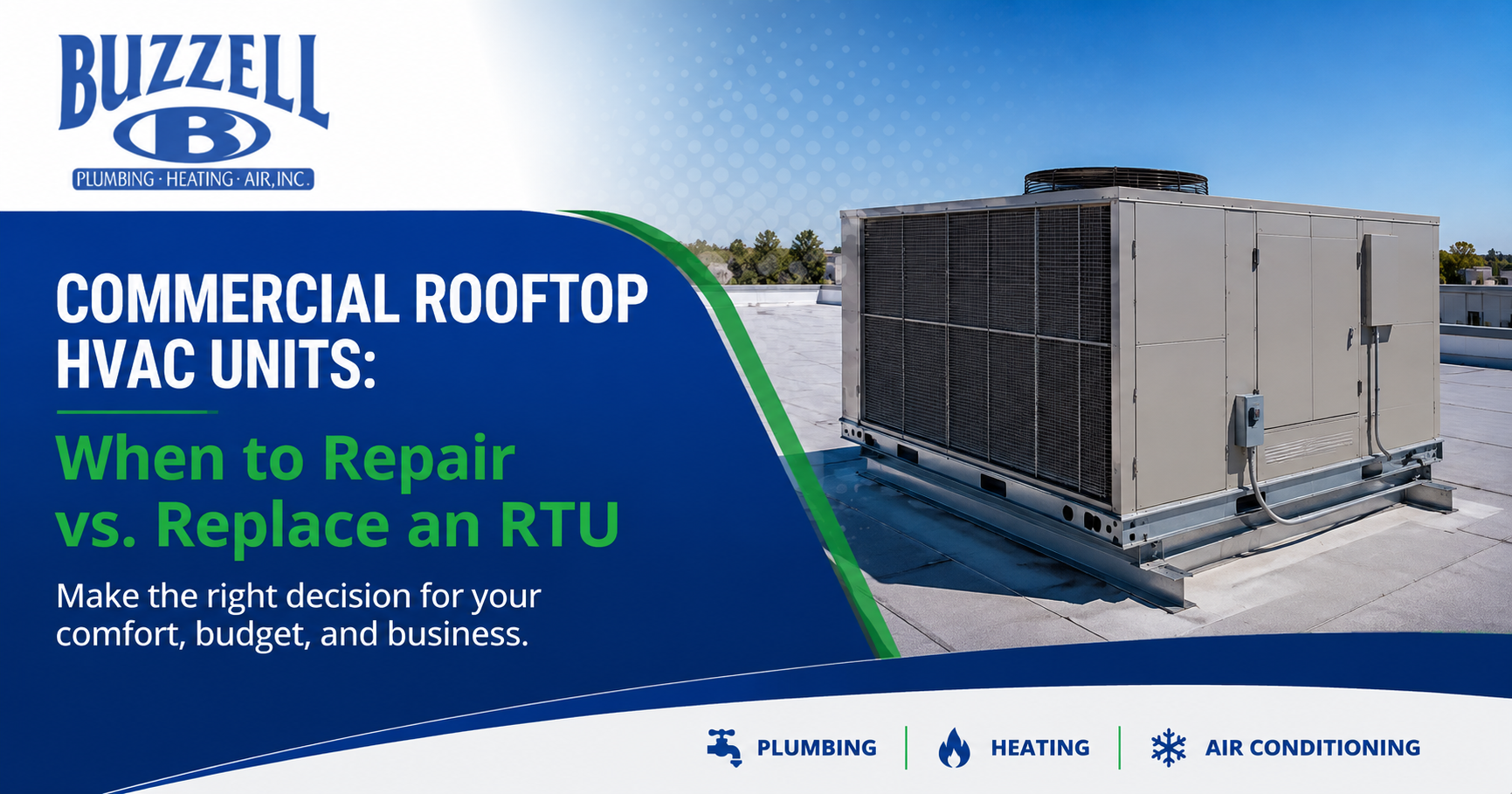
Commercial rooftop HVAC units play an important role in keeping businesses comfortable, productive, and operational. From retail stores and office buildings to warehouses and other commercial facilities, rooftop units provide heating and cooling while keeping valuable mechanical equipment out of the way. Like any HVAC equipment, however, a rooftop unit will eventually experience wear and require repairs. At some point, building owners and facility managers face a more difficult question: Does it make sense to keep repairing the existing unit, or is it time for a replacement? Understanding the condition, age, performance, and repair history of your commercial RTU can help you make that decision before an unexpected failure disrupts your business. What Is a Commercial Rooftop HVAC Unit? A rooftop unit, commonly called an RTU, is a packaged HVAC system installed on the roof of a commercial building. Unlike systems that have separate indoor and outdoor components, an RTU typically houses many of the primary heating and cooling components within a single cabinet. Depending on the system and building, an RTU may provide heating, cooling, ventilation, or a combination of these functions. Conditioned air is distributed throughout the building using ductwork. Rooftop units are common in commercial facilities because they conserve indoor space and provide technicians with convenient access to mechanical equipment without requiring significant disruption inside the building. However, exposure to heat, rain, wind, debris, and changing weather conditions can contribute to wear over time. Routine commercial HVAC maintenance is important for identifying problems before they lead to more significant equipment failures. How Long Do Commercial Rooftop HVAC Units Last? There is no single lifespan that applies to every commercial RTU. Equipment quality, installation, operating conditions, maintenance history, usage, climate, and building demands can all affect longevity. A heavily used rooftop unit serving a busy commercial property may experience different wear than equipment operating under lighter conditions. Lack of maintenance can also shorten equipment life by allowing relatively minor problems to place additional stress on major components. Instead of relying on age alone, businesses should consider age alongside the unit's overall condition and performance. An older RTU that has received consistent professional maintenance may still have useful service life remaining. On the other hand, a system experiencing frequent failures, poor performance, and increasing repair costs may warrant replacement sooner. Signs Your Commercial RTU May Need Repair Not every rooftop HVAC problem means you need new equipment. Many issues can be addressed through professional commercial HVAC repair, particularly when the equipment is otherwise in good condition. Signs that your RTU may require service include: Unusual noises during operation Weak or inconsistent airflow Difficulty maintaining the desired indoor temperature Unexpected increases in energy consumption Short cycling or unusually long operating cycles Hot and cold areas throughout the building Unusual odors from vents Frequent thermostat adjustments Water or moisture around HVAC components Unexpected system shutdowns Scheduling service when these symptoms first appear can help prevent a smaller problem from becoming a more expensive failure. When Does Repairing an RTU Make Sense? Repair is often the practical choice when the rooftop unit is relatively young, has been maintained consistently, and has not developed a pattern of major failures. For example, replacing a worn component may restore reliable operation without requiring a larger capital investment. A commercial HVAC technician can evaluate the equipment and determine whether the issue is isolated or an indication of broader deterioration. The unit's repair history is particularly important. One repair does not necessarily indicate that a system is nearing the end of its service life. But if technicians are being called repeatedly for different problems, those individual repair costs can begin adding up. Facility managers should keep records of maintenance visits, repair expenses, equipment performance, and recurring issues. This information makes it easier to evaluate the long-term cost of continuing to operate an existing RTU. When Should You Consider RTU Replacement? Eventually, repairing aging commercial HVAC equipment may provide diminishing returns. Replacement can become the better long-term option when several warning signs occur together. Frequent Breakdowns An RTU that requires repeated service calls can become both expensive and disruptive. Even if individual repairs seem manageable, recurring failures can create unpredictable operating costs. For businesses, downtime is another important consideration. HVAC failures can affect employees, customers, tenants, equipment, inventory, and normal operations. Rising Energy Costs Older or poorly performing HVAC equipment may have to operate longer to maintain comfortable indoor conditions. If energy consumption continues increasing without a clear explanation, the HVAC system should be evaluated. Problems such as dirty components, airflow restrictions, failing controls, duct issues, or mechanical wear may be responsible. When those problems are tied to an aging RTU, replacement with appropriately selected equipment may provide better long-term performance. Major Component Failure The cost of the repair should always be considered in relation to the value and expected remaining life of the equipment. Investing heavily in an older system may make less financial sense if additional components are likely to fail in the near future. A professional evaluation can help determine whether the repair is likely to extend useful service life or simply postpone replacement. Inconsistent Building Comfort An RTU should be able to maintain appropriate temperatures throughout the areas it serves. Persistent hot spots, cold areas, airflow problems, or difficulty maintaining temperature can indicate several possible issues. The problem may involve the equipment itself, ductwork, controls, building changes, or system sizing. Before replacing an RTU, the underlying cause should be identified so the new equipment addresses the actual needs of the building. Look Beyond the Initial Cost of RTU Replacement The upfront cost of commercial HVAC replacement is understandably a major consideration, but it should not be the only factor in the decision. Facility managers should consider the total cost of continuing to operate the existing system, including: Current repair expenses Expected future repairs Energy consumption Maintenance requirements Risk of unplanned downtime Equipment reliability Building comfort Remaining service life For some facilities, continuing to repair an existing RTU is financially reasonable. For others, replacement provides greater predictability and reduces the risk associated with aging equipment. Planning ahead also gives businesses more time to evaluate equipment options and budget for replacement instead of making a rushed decision after a complete system failure. Preventive Maintenance Can Help Extend RTU Life One of the best ways to get more value from commercial rooftop HVAC equipment is to maintain it consistently. Preventive maintenance allows technicians to inspect the system, identify developing issues, clean critical components, check operating conditions, and address wear before it causes more significant problems. Routine service also gives facility managers a clearer picture of equipment condition. Instead of discovering that an RTU is near the end of its useful life when it suddenly stops working, businesses can plan future replacements as part of their capital budgets. For properties with multiple rooftop units, this can be particularly valuable. Equipment replacement can potentially be prioritized based on condition and business needs rather than waiting for several aging systems to fail unexpectedly. Get Professional Guidance for Your Commercial RTU Deciding whether to repair or replace a commercial rooftop HVAC unit requires more than looking at its age. Repair history, operating costs, equipment condition, building requirements, and the risk of downtime should all be considered. Buzzell Plumbing, Heating & Air provides commercial HVAC services for businesses throughout Middle Georgia, including rooftop units, packaged systems, split systems, heat pumps, VRF systems, building controls, maintenance, repair, and replacement. If your commercial RTU is experiencing recurring problems or you are unsure how much service life it has left, having the equipment professionally evaluated can help you plan your next step. Contact Buzzell Plumbing, Heating & Air to schedule commercial HVAC service and keep your building's heating and cooling systems operating reliably.
By Lauren Scott August 19, 2026
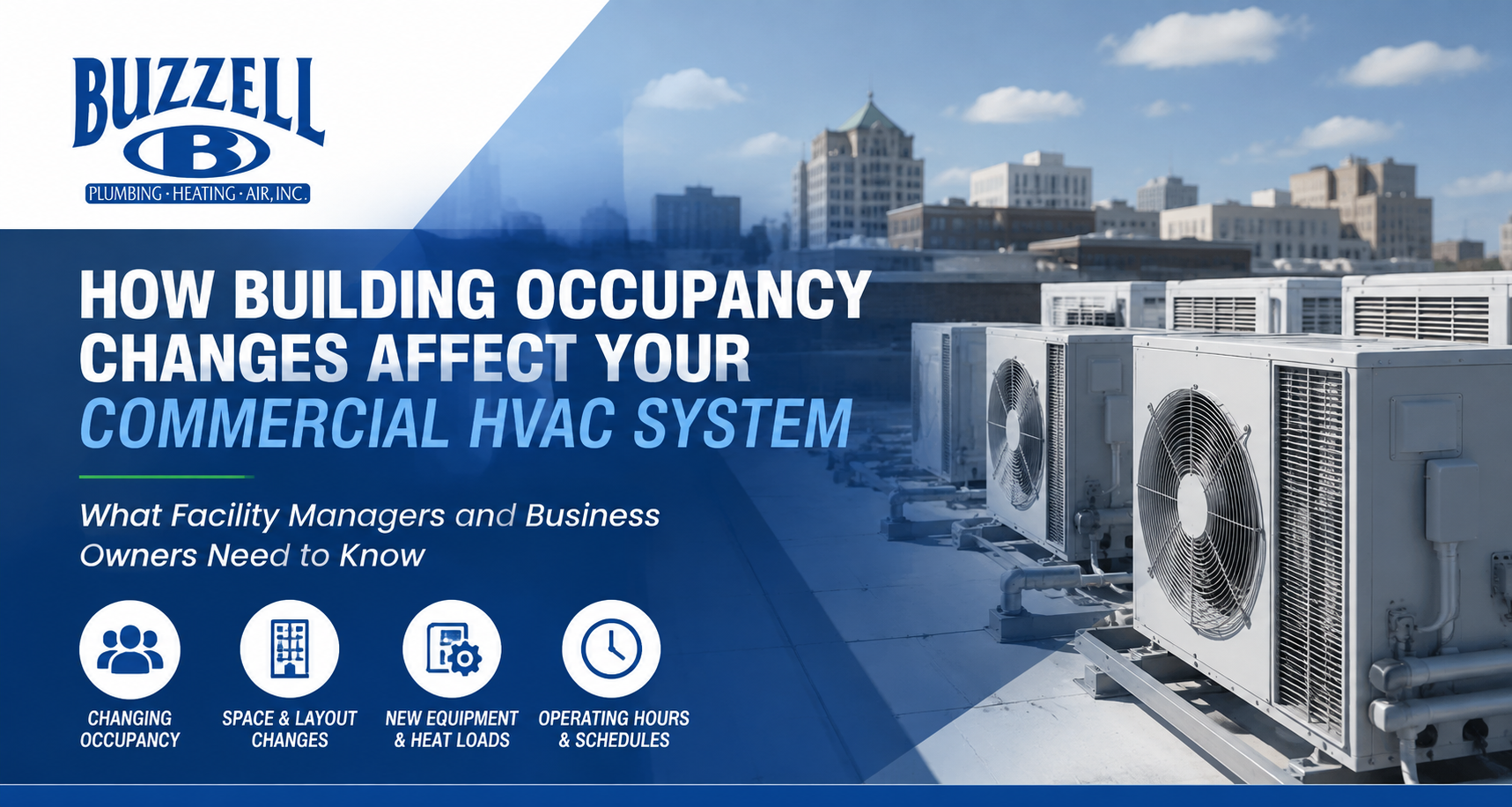
Learn how changes in occupancy, layouts, equipment, and operating hours can impact commercial HVAC performance, comfort, efficiency, and energy costs.
By Lauren Scott August 11, 2026
Learn what the best central heating and air conditioning system is for your commercial building and what to consider when choosing the right HVAC solution.
By Lauren Scott August 4, 2026
Learn when to repair, retrofit, or replace your commercial HVAC system. Buzzell helps Middle Georgia businesses maximize performance and reduce costs.
By Lauren Scott July 27, 2026
Experiencing uneven home temperatures in Columbia, SC? Learn the common causes of hot and cold spots and how Buzzell can restore comfort to every room.
Buzzell HVAC asset management plan ad with engineer overlooking a city and laptop dashboard screenshot
By Lauren Scott July 21, 2026
Learn how a commercial HVAC asset management plan helps businesses reduce downtime, control repair costs, extend equipment life, and budget for future replacements.
Commercial HVAC units illustrating commercial HVAC retrofits for improved efficiency and lifespan
By Lauren Scott July 13, 2026
Learn how commercial HVAC retrofits can improve efficiency, extend equipment life, reduce energy costs, and delay costly system replacement for your business.
By Lauren Scott July 8, 2026
Learn how hard water plumbing problems can damage pipes, water heaters, and appliances, plus the signs to watch for and solutions for your home.